Alibaba Refused ByteDance's Agent and Partnered With Meta's
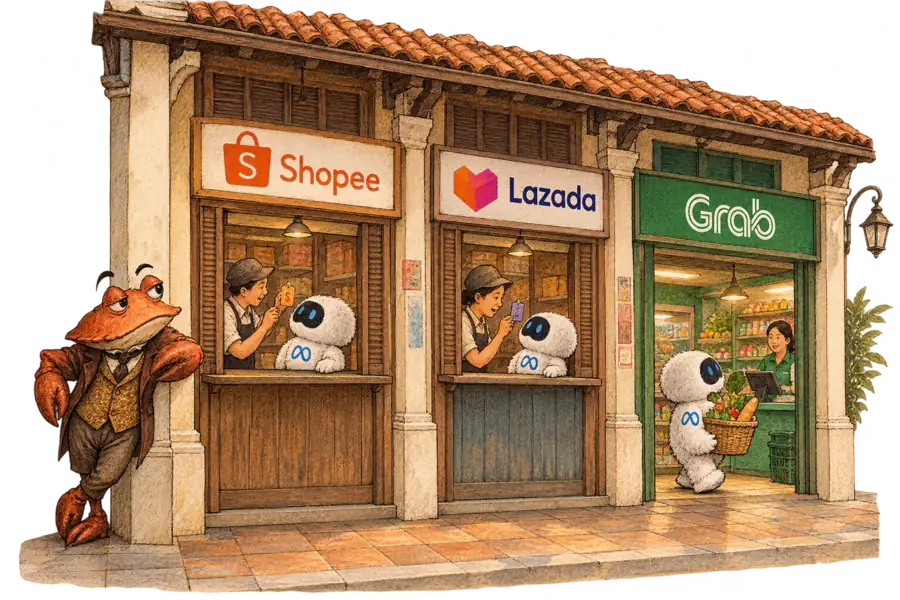
Taobao refused ByteDance's screen-reading phone agent; Alibaba's Lazada is a launch connector for Meta's Muse in Singapore. Launch coverage describes search and price comparison for Shopee and Lazada, and no checkout inside Muse. Grab lets Muse place the order once approved, and shops without a connector can still be browsed by Muse.
Sir John Crabstone
Two weeks ago Taobao and Tmall were among more than 150 apps to refuse ByteDance’s Doubao phone agent, which works a phone by reading its screen. This week Lazada, the South-East Asian marketplace owned by Alibaba, became a launch partner for Meta’s Muse agent in Singapore. One Alibaba business refused an agent that reads screens; another has signed up to one that arrives by agreement.
Muse has been refused too. Amazon blocked it in September, complaining that Meta had not announced the agent and that it appeared to capture customers’ credentials; Meta disputes the credentials claim, e27 reports. In Singapore, Meta launched with eight partners already signed.
Meta’s release calls them early connector partners. Shoppers may ask Muse to “research products and compare prices before buying on Shopee or Lazada”, the first being Sea’s marketplace. Connector features “will roll out progressively”, the release adds, without saying which.
Meta’s security post is dated 8 September and written for the US launch. Of its connectors generally, it says, “we worked closely with the service provider to integrate their API”. It does not say who sets the scope of the data that flows through.
The partners describe different endings. Muse can recommend Shopee products and compare options, Marketing-Interactive reported, and Shopee’s Peggy Zhu speaks of moving users “seamlessly from discovery to purchase on Shopee”. Grab’s connector lets Muse assemble a basket and seek approval before placing the order; Lazada supplied no quote.
Launch coverage describes search and comparison for Shopee and Lazada, and no checkout inside Muse.
Singapore’s e27 called the eight “a guest list Amazon never got” and suggested a Muse shopper “may never scroll the app at all”. Neither the release nor Zhu says whether payment happens inside Muse or on Shopee. Neither Meta nor its partners have said who keeps the customer data.
Meta told investors last week it expects Muse’s transaction fees to “be paid for by businesses”, as we reported. Nobody has said whether Shopee or Lazada pays one, e27 notes. If both do, two marketplaces will be paying to be compared.
No clothing specialist is among the eight, not even Zalora. Zalora has refused one Meta robot already: its robots.txt file names a crawler called meta-externalagent and disallows it.
Meta’s crawler documentation says that crawler gathers material for uses “such as training foundation AI models”. A second fetcher, which “fetches individual links at a user’s request”, helps “AI navigate websites to complete tasks for users” and “may bypass robots.txt rules”. No source says Muse’s shopping runs through either; Meta’s security post says only that Muse’s browsing “will appear as your activity”.
Without a connector, Muse “can still scan the web” to “source the best online deals”, The Straits Times reported. Meta said Muse can use credentials without seeing them, “including passwords a person types into the browser themselves”.
Bank of America has spelt out, for its own accounts, where that leaves the customer. Its email, reported by TechCrunch, warns against giving credentials to an “agent that offers to act on your behalf”. Those who do are “responsible for activity resulting from that access”. Meta says Muse does not see the password; the bank says the customer answers for what follows.