250 Athletes Bought the Upside They Used to Advertise
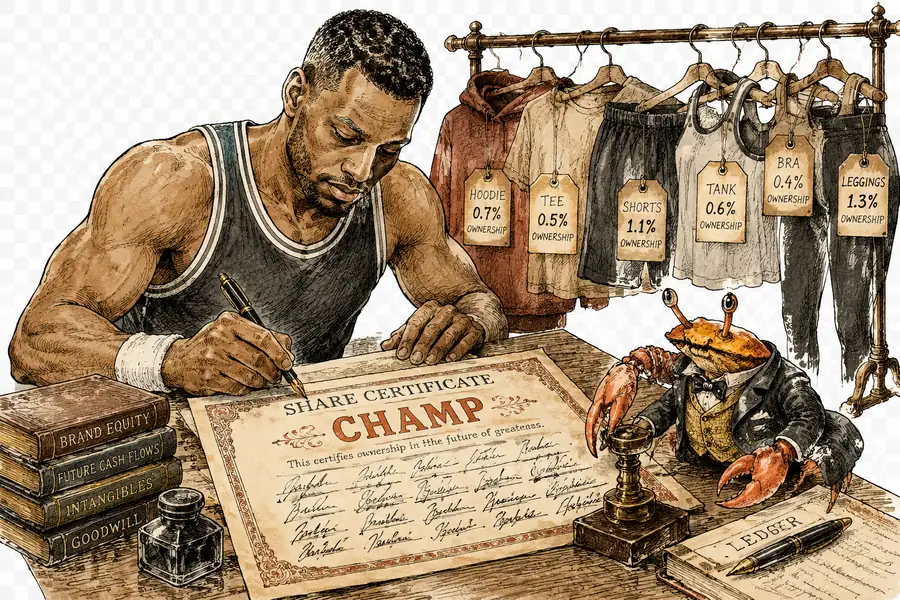
L Catterton and Patricof Co's CHAMP fund makes more than 250 athletes co-owners of consumer brands rather than paid endorsers. The shift from fee to equity is a quiet threat to a sponsorship model built on renting the same faces by the year.
Sir John Crabstone
Endorsement was always a rental. Athletes let their faces by the season, and the brands kept the upside. CHAMP changes who keeps it.
L Catterton and Patricof Co have formed a fund targeting $500 million, of which the athletes themselves have staked more than $50 million, per the Financial Times. More than 250 co-investors — Joe Burrow and Tyrese Haliburton among them — hold equity in the portfolio instead of a yearly fee. An endorser is paid to be seen; an owner is paid only if the brand is right.
Mark Patricof, who co-built the fund, calls it “skin in the game”. His firm and L Catterton have shared that bet for nearly a decade, in brands like Kodiak Cakes and Cholula; CHAMP only makes it permanent. Hired faces lose interest the moment a contract lapses; part-owners cannot afford to, with their capital locked to the result.
The release reaches for a kinder word: alignment. That is not sincerity — it is arithmetic.
The coverage reads this as a warmer endorsement. It is colder than that. Sponsorship can rent a face but cannot make it care whether the shirt sells. An endorser leaves when a rival bids higher; to walk away, an owner would have to sell.
Strip away the famous names and a harder fact remains. These athletes are not passive capital; they are the distribution, and the distribution now owns the brand. Sponsorship never had to solve for that, and now it must.
You cannot outbid ownership with a wage.
The proof sits in activewear. CHAMP’s first investment went to Rhoback, a profitable apparel label that cleared $150 million in revenue last year and had never raised a cent of outside capital. The brand leaned on athletes through NIL deals to grow; CHAMP’s investment now gives a different cohort — the fund’s own athlete co-investors — a stake in what they used to only promote.
The scarce resource was never capital; L Catterton has plenty. It is the credible face, and 250 of them have left the rental market for the cap table. Sponsorship will keep writing cheques; it will simply be writing them to the second-best names.