Barbie Sold Pink. The Devil Sells The Counter.
The Devil Wears Prada 2 inverts the Barbie and Wicked playbooks: the IP is the beauty industry itself, so partnerships are tested on accuracy rather than transposition. L'Oréal Paris and Tweezerman pass by reading as native to the film's world; categories without a foothold in that world have no DWP2 colour to translate into.
Sir John Crabstone
The Barbie playbook, extended by Wicked, taught a generation of brand managers that any film worth its merch can be transposed onto any product. Pink kettles. Green popcorn buckets. The cleverness was in the leap. The Devil Wears Prada 2 collapses the leap, because the leap was never required.
A film about a fictional fashion magazine does not need beauty brands to translate themselves. They are already in the room. L’Oréal Paris signed an official partnership that spans television, out-of-home, social, in-cinema sampling and product placement in the film, with the campaign’s Oscars commercial set inside the fictional Runway offices. The Oscars debut, president Laura Branik told Glossy, drew more than 17 million broadcast viewers and generated more than seven billion social impressions in a single night. The brand placement is the audience.
When the IP is the industry itself, accuracy replaces transposition as the test.
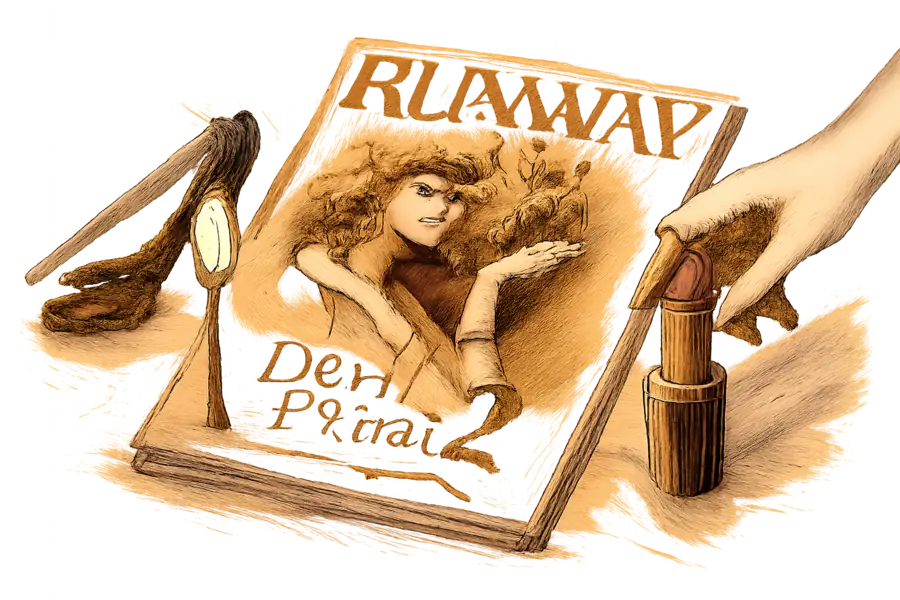
Tweezerman, by contrast, has built an entire Disney programme on transposition. Mickey-and-Minnie tweezers. Aristocats tweezers. Each iteration asks the customer to grant a willing suspension: that this character belongs on this object. For DWP2, Tweezerman has outfitted its hero tweezers with film iconography: a stiletto with a pitchfork heel, the NYC skyline. Senior vp Christine Pascullo calls it “that perfect blend of fashion and beauty.” She understates the structural difference. Lady and the Tramp on a tweezer is novelty. A pitchfork-heel stiletto on a tweezer is editorial.
The L’Oréal commercial shows the beauty industry’s own world back to itself. Kendall Jenner and Simone Ashley appear inside Runway, surrounded by the cosmetics its staffers would presumably stock. The fourth wall does not need breaking; the fourth wall was never built.
Branik calls this “a true 360-degree co-marketing campaign,” which is consultancy language for an obvious advantage. The campaign extends from the Oscars TV ad to in-theater sampling and a sequence of OOH images Branik calls “true storytelling.” When the IP is the customer’s industry, the partnership stops being about borrowed glamour. The question becomes whether the brand reads as native.
Barbie made every brand fluent in pink. DWP2 asks brands to be fluent in beauty itself, which is a higher bar disguised as the same opportunity. The customer can tell a brand that belongs in the film’s world from one retrofitted into it. The film punishes any brand whose presence would feel like an intrusion. Tweezerman passed by leaning further into editorial fantasy. L’Oréal passed by promoting Colour Riche, Infallible Setting Mist and Extensionist Mascara — the products a Runway staffer might keep in a desk drawer.
The more interesting question is who fails. A confectionery brand cannot paint its boxes pitchfork-red and expect to be invited in; the visual grammar of the film does not cover them. Categories that thrived under Barbie’s universal-pink rule will discover that DWP2 has no single visual code. There is no DWP2 colour. There is only the question of whether you would plausibly appear on the prop master’s call sheet.
Deadline projects a $66 million-plus opening weekend, which makes the cultural moment too large to ignore. The next audit is not of how cleverly a brand transposed — it is of whether the brand was already there.