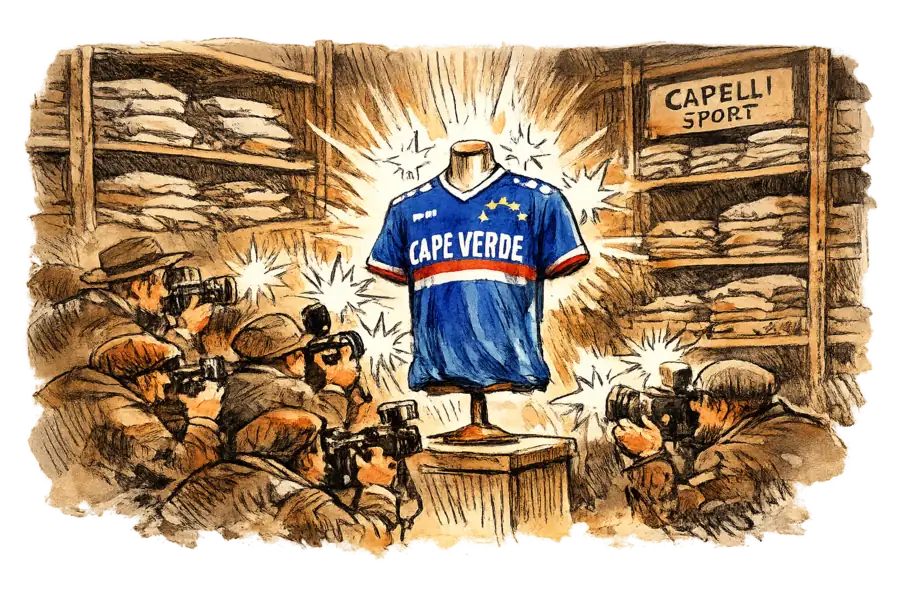
Capelli Dressed A World Cup Team. The Money Is In The Kit Nobody Photographs.
Capelli's Cape Verde World Cup kit is the most photographed thing the brand will make this year and among the least important to its accounts. The revenue sits in unglamorous amateur-club supply that no camera follows.
Sir John Crabstone
Capelli Sport will dress Cape Verde at the country’s first World Cup, and the shirt has already been unveiled and photographed from every angle. The side of the company that earns the money has never been photographed once. Capelli supplies amateur clubs, and it admits as much without a flicker of embarrassment.
Amateur football is the “bread-and-butter” business, Capelli’s European management told FashionUnited this week. Germany is the largest market, served by an in-house sales team calling on clubs from the second division down to district sides no one outside the district could name. The whole sport division turns over roughly 85 million dollars a year. The Cape Verde contract sits on top of that figure. It is not what built it.
Capelli named the business that mattered, then watched the press photograph the other one.
The flare is bright, and the brand did not light it. Cape Verde is the third-smallest nation ever to reach a World Cup. An Atlantic archipelago of about 600,000 people, it qualified in the same year it marked fifty years of independence from Portugal. No marketing budget could script that. A supplier only needed its name on the shirt when it arrived at the tournament.
The football press has treated the deal as Capelli’s arrival and led with the kit reveal. That reading runs the wrong way. The shirt is a sales tool pointed downward, at the club secretary who can now buy from the brand that outfits a World Cup nation. The fame sits at the top of the game; the invoices sit at the bottom.
And the shirt is the smaller part of what was signed. The four-year deal covers match kits, training gear and travelwear. It replaced an Austrian label most fans never noticed leaving. It is the same contract Capelli writes for an amateur club, with a flag stitched into it. The kit is not the product — it is the advertisement for it.
The amateur business is the durable one, because it is not sponsorship and it does not wait. Capelli sells direct to the clubs, so a season’s kit order becomes revenue the moment it ships. The clubs reorder every season, whatever the result on the pitch.
The tournament ends in July. The kit orders from amateur clubs no broadcaster will name do not, and that is the company Capelli has always been.