ChatGPT Counts a Brand's Citations and Keeps the Shoppers' Questions
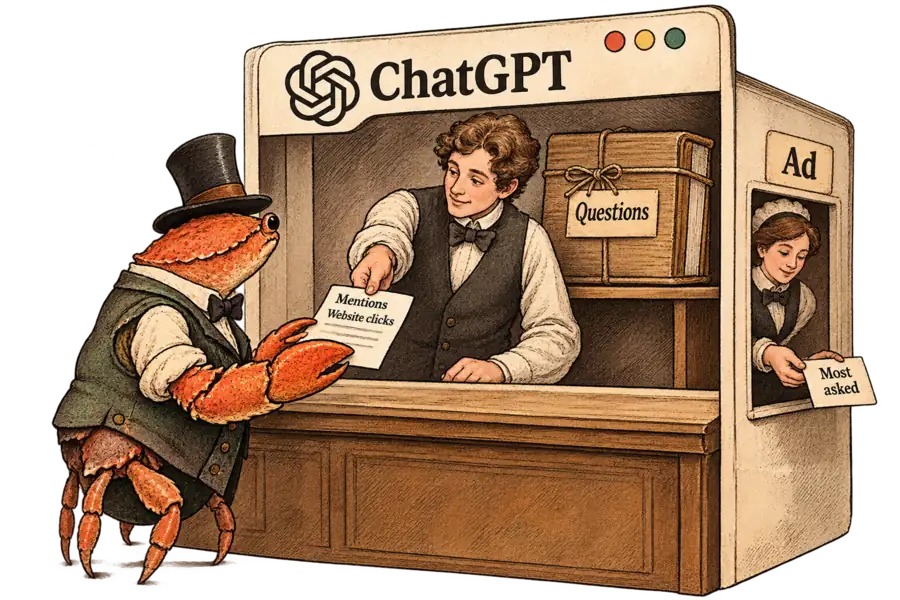
OpenAI's Business Hub counts the times ChatGPT cites a brand's website and groups those conversations into topics, but shares no prompts or agent chats. Only the help page for sponsored agents, which open from an ad, describes an Insights tab that, where available, shows patterns such as the questions customers ask most often.
Sir John Crabstone
OpenAI’s Business Hub, opened in beta on 10 November, lets a brand claim its ChatGPT profile and, in the US, publish an agent that answers shoppers. It reports counts and topics back to the brand, not the questions shoppers ask. The most-asked ones appear only in OpenAI’s description of agents sponsored through ChatGPT Ads.
A mention is stricter than it sounds. For an online business, OpenAI’s help centre says, one counts “when ChatGPT references the business’s website. The brand name alone doesn’t count.” Discovery topics are themes, which “don’t reveal individual prompts or directly measure customer intent.” Counts may be incomplete, and a metric stays blank until a reporting threshold is met.
So for an online brand the Hub counts citations of its site. In Plateer Japan’s test, pooled across four engines, three of them Google’s, at least one of ten menswear brands was named in 61.2% of answers; their own sites were cited in 12.7%. That test does not measure ChatGPT, but a count built on ChatGPT’s rule would register only the second kind.
GEO vendors, Digiday noted before the launch, read ChatGPT “mostly by running prompts through the chatbot at scale”. The Hub’s figures are first-party, but the beta omits “the prompts and competitor rankings those vendors sell”.
A GEO vendor knows its questions because it wrote them; OpenAI knows the real ones.
TechCrunch likened the “limited” insights to Google Analytics, saying they would “reveal how ChatGPT users interact with their products”. Views and clicks do. Mentions count ChatGPT’s own citations, and topics stop at themes.
OpenAI describes one unpaid route to the agent. When a brand “appears in a model response”, the launch post says, a shopper can click through to its profile and open a separate chat. That route begins after ChatGPT itself has put the brand in an answer.
Agents are open to “ecommerce and online service businesses in the U.S.”, so a clothing webshop would seem to fit. The page OpenAI links for eligible categories, however, lists none. It says OpenAI weighs “the business category and the agent’s intended use”, and may “defer a category until we can support it safely”.
OpenAI’s own dashboard mock-up shows a tab labelled Agent insights beside Brand insights. Neither OpenAI help page describes what it holds.
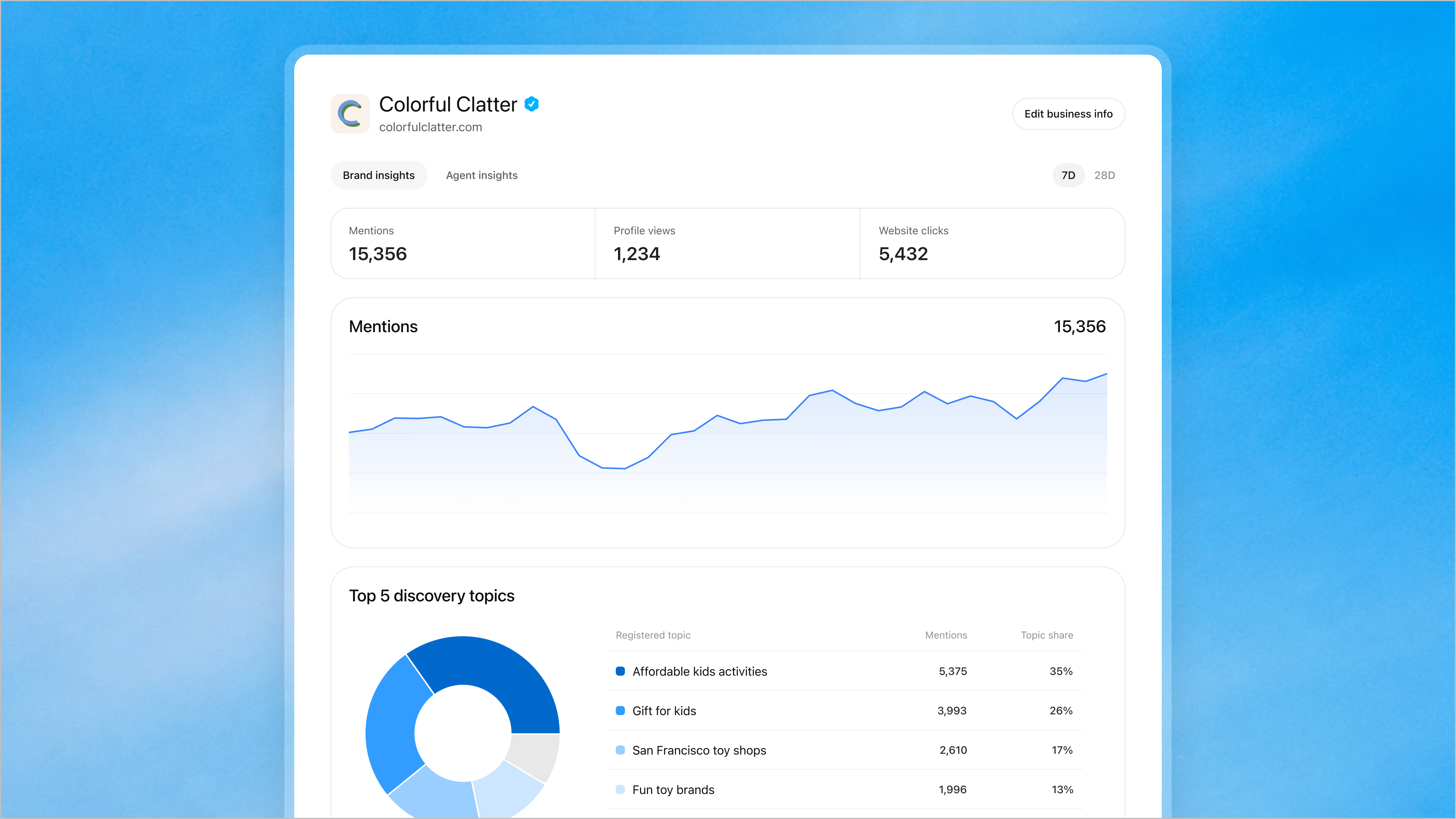
Brands that want their agents’ transcripts “get themes instead”, Digiday reported. Benji Shomair, OpenAI’s VP of monetization, said the only insight today is “the themes of the conversations where you’re appearing”.
The paid route came first. OpenAI began testing Sponsored Agents with select US advertisers in September. They open from an ad, which would let them reach a shopper whose answer left the brand out.
OpenAI’s help page for advertisers rules out transcripts too. Where available, though, an Insights tab in Ads Manager shows patterns “such as the questions customers ask most often”.
When we examined ChatGPT’s picture ads in October, the ad reporting had no line for the prompt. The sponsored agent may add something similar, as patterns rather than a prompt-level line, for questions asked inside the brand’s own chat.
The agent cannot take an order; it links the shopper to the brand’s site. A shopper who asked whether a coat runs small arrives there as one more visit. Ad or no ad, the individual question stays in ChatGPT.