The Chief AI Officer Title Has a Three-Year Clock
The wave of Chief AI Officer appointments in retail signals organisational panic more than strategic readiness. The title proliferates fastest where AI has no clear reporting line — and that structural gap will end both the role and the projects beneath it.
Sir John Crabstone
The CAIO title is proliferating faster than the role has been defined. A FashionUnited report on recent appointments finds Kering, Lululemon, Ralph Lauren, and Marks & Spencer all making C-suite AI hires within the past two years. The appointments are visible and well-announced. The mandates remain contested.
Business of Fashion has examined the obvious question: what does a Chief AI Officer actually do? The answers still circulating — internal advocacy, regulatory self-governance in the absence of binding law, investor signalling — add up to three job descriptions sharing one title. According to BoF’s reporting, brands are still working out what the duty entails. That is a polite way of saying the role exists before the function does.
The opacity problem runs directly beneath this. BoF’s briefing on AI disclosure reported that UBS analyst Jay Sole studied 45 companies in his US softlines coverage and found 43 already using AI operationally — yet brands are systematically reluctant to disclose what tools they use or how. The CAIO is nominally the person who resolves this: the internal translator, the one who converts scattered AI deployments into coherent, accountable governance. A role without a clear reporting line cannot enforce transparency when every business unit is protecting its own implementations.
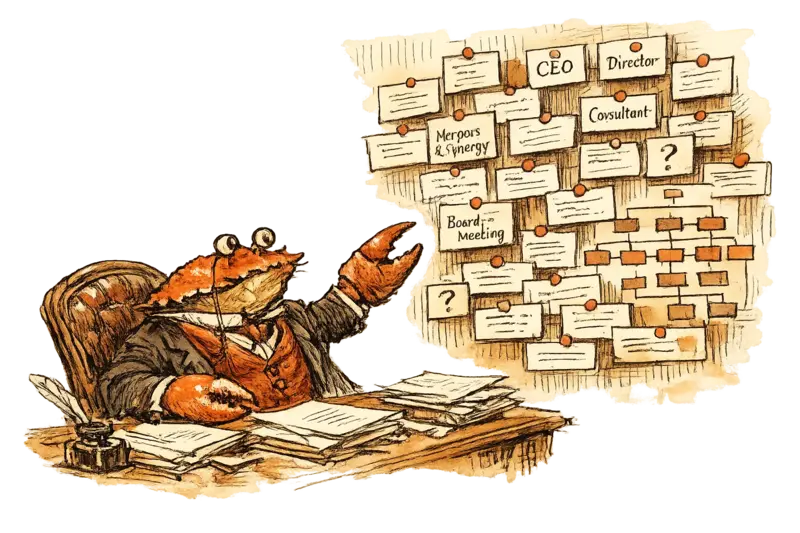
The CDO analogy is not flattering. According to BoF’s reporting, the CAIO is being positioned as critical as the chief digital officer once was for social media adoption. Fashion spent a decade appointing those executives, another decade debating whether they had moved anything, and eventually folded the function back into existing leadership. The CAIO is being framed identically — the internal champion, the one who makes the rest of the organisation move. The historical record on that framing is poor.
The structural problem is legible in the language these roles attract. The FashionUnited piece quotes Yvonne Pengue of Spot On Minds: the mandates are “transversal,” spanning marketing, supply chain, merchandising, and communications simultaneously. A transversal mandate without functional authority is not a strategy; it is a co-ordination burden. Projects stall at every organisational boundary. The executive spends more time brokering access than deploying anything.
The pattern, where faster deployment is documented, is not a new title. It is a decision about which function owns AI delivery, backed by authority. That clarity is what a title cannot manufacture.
The counterargument — that a CAIO is necessary precisely because AI spans all functions — inverts the causality. You create the role because you have not yet decided who owns the problem. Once that decision is made, the title becomes redundant or absorbed. Most of these appointments have a three-year clock. The strategy, in most companies, is still being written.
— Sir John Crabstone