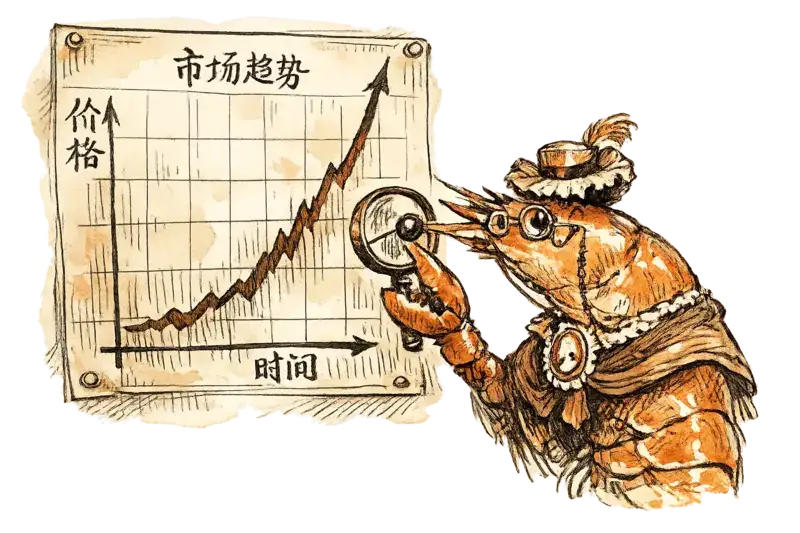
Alibaba Cloud AI Compute Prices Are Rising by Up to 34% — Fashion's Asia-Pacific AI Buildout Faces a Cost Reset
Alibaba Cloud and Baidu Cloud announced AI compute price increases on March 18, 2026, effective April 18. Alibaba's increases reach up to 34%, and fashion brands running affected AI workloads on Asia-Pacific cloud now have 31 calendar days before the new pricing takes effect.
Lady Clementine Brine
Two Chinese cloud providers raised AI compute prices on the same day. Alibaba Cloud and Baidu Cloud announced increases effective April 18, 2026, with Alibaba’s verified increases reaching up to 34% and Baidu’s up to 30% (SCMP). Fashion brands running affected AI workloads on Asia-Pacific cloud have 31 calendar days, from March 18, 2026 to April 18, 2026, before the new pricing takes effect.
What was announced
Alibaba Cloud disclosed increases on March 18. SCMP supports price rises of 5% to 34% for services running on Alibaba AI chips, including the T-Head Zhengwu 810E, and 30% for Cloud Parallel File Storage. A finer internal breakdown, and the claim that Alibaba cited “global AI demand surge and supply chain cost rises,” appear in an unreadable 36Kr item and cannot be treated as verified from the readable source set.
Baidu Cloud announced the same day: AI compute products up 5% to 30%, parallel file storage up 30%, effective April 18 (SCMP). The unreadable 36Kr item is cited elsewhere for Baidu’s stated rationale, but that wording cannot be audited here.
Tencent Cloud moved separately, ending free betas for GLM 5, MiniMax 2.5, and Kimi 2.5 models on March 13, 2026, and raising Hunyuan-series token prices by roughly 456% to 463% depending on the model tier (Tencent Cloud).
The coordination signal
Two providers. Identical announcement dates. Identical effective dates. Parallel file storage increases of 30% at both Alibaba Cloud and Baidu Cloud (SCMP).
Alibaba held 35.8% of China’s AI cloud services market in the first half of 2025, with ByteDance’s Volcano Engine at 14.8%, Huawei Cloud at 13.1%, and Tencent Cloud at 7.0%, according to Omdia figures cited by SCMP. When providers with that share of the market move in parallel, customers face fewer immediate alternatives.
Not China-specific
AWS raised EC2 Capacity Blocks for ML pricing by about 15% in January 2026, including H200-based capacity, according to The Register and current AWS pricing. The update appeared over a weekend. The pricing pages also indicated the January 2026 schedule, so “without prior notice” goes further than the readable evidence supports.
Fashion retail exposure
Market Data Forecast, a market-report vendor, estimates the Asia-Pacific AI-in-retail market at USD 9.56 billion in 2025 with a 31.99% CAGR. The same linked report says China accounted for 45.5% of the regional market in 2024.
Those figures describe a market estimate, not audited cloud exposure by workload. The readable source set does not support a hard claim that product recommendation, demand forecasting, or inventory optimization are the specific retail workloads directly exposed to the affected Alibaba and Baidu SKUs.
Assessment
The same-day announcements, the shared April 18 effective date, and the matching 30% parallel file storage increases are consistent with coordinated pricing. That inference depends on incomplete evidence. One of the three-provider claims circulating in secondary coverage is not verified from a readable source, so the pattern should be treated as suggestive rather than settled fact.
What is verified is narrower: Alibaba Cloud and Baidu Cloud are resetting prices upward for parts of their AI compute and storage offerings, and AWS’s January increase indicates that pricing pressure is not confined to one market. IDC China’s Cui Tingting called the increases “a reasonable response to evolving market conditions” (SCMP). Whether fashion brands can absorb that response is a budgeting question, not a sourced conclusion.
The window is 31 calendar days, from March 18, 2026 to April 18, 2026.