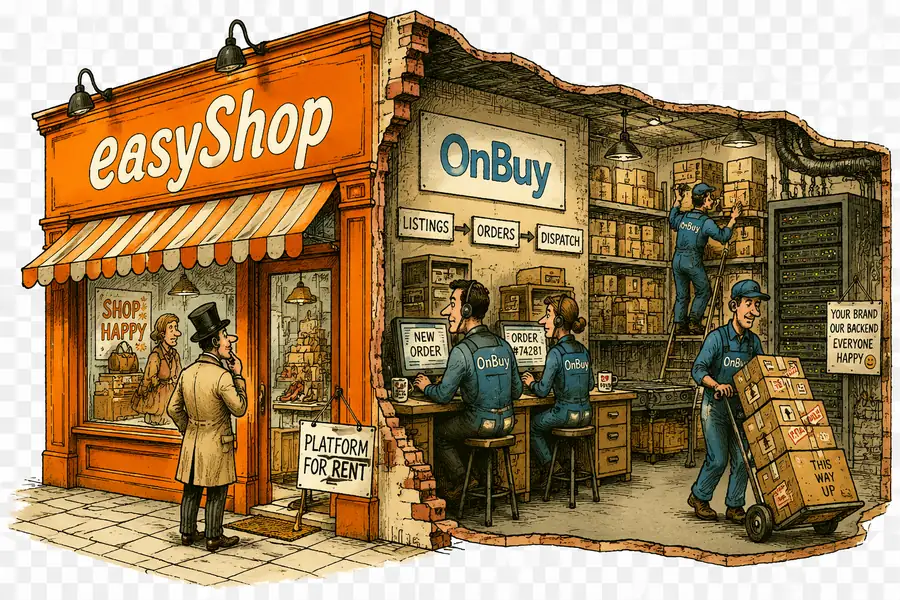
easyGroup Didn't Build a Marketplace. It Rented One.
easyGroup is launching easyShop.com without owning any of the technology behind it; OnBuy will run the marketplace on its proprietary OnCommerce platform across 21 European countries. The marketplace itself has become a layer brands rent, the way retailers already rent their AI.
Sir John Crabstone
easyGroup will launch easyShop.com across Europe later this year, and it will not own a line of code in the software that runs it. The site belongs to OnBuy, which will run it on a marketplace platform of its own called OnCommerce — handling the sellers, the tax, and the mechanics the name does not touch. easyGroup supplies the name; the shop itself is rented.
This is less strange than it reads, because easyGroup has never sold anything but a name. Sir Stelios Haji-Ioannou built a conglomerate by licensing one word and one shade of orange to airlines, hotels, and gyms he did not run — easyJet, easyHotel, easyGym each rest on brand arrangements the group does not operate day to day. The businesses differ; the model does not. easyShop carries that habit into commerce. The brand was always the product; now the product has a till it does not own.
OnBuy brings the rest. Its OnCommerce platform already lists more than 100 million products by its own count, with several markets growing past 150% a quarter. OnCommerce is the white-label layer the company sells separately from its own consumer marketplace — infrastructure licensed to brand partners who want a working shop without building one. easyGroup gets a working shop in 21 countries without hiring an engineer. OnBuy gets a tenant whose name is already on the high street.
The trade press calls this easyGroup entering online retail. The more telling pivot is OnBuy’s: it has stopped selling only to shoppers and begun selling the platform itself to brands who want the commerce infrastructure without the build cost. Standing up a marketplace once meant years of engineering; it now means signing with the company that already runs one. The scarce input is no longer the technology. It is a name a shopper trusts.
Retailers have rented capability before, most recently their intelligence. In 2024, the Dutch fashion retailer Omoda built its stylist on Google’s models rather than its own; the cleverness came on licence, the brand stayed on the label. The marketplace is the next layer to come loose from the company whose name sits on it. The brand outsourced its thinking; now it outsources the shop.
AI assistance can be licensed by the session; the storefront, it turns out, by the year. The question, for any brand watching this, is what remains genuinely theirs when the infrastructure is all for hire. For now, the name is the answer, and it is a narrower foundation than it sounds.
Stelios has spent three decades proving you can franchise a colour; easyShop proves you can rent whatever the colour points at.
What easyGroup brings is the one thing OnBuy cannot supply: a name shoppers already read as cheap. He has policed that name jealously for years; it is the only asset in this venture not for hire. The platform was always going to be for rent. The open question is how long the name stays worth more than the shop it now points to.