FIFA's Breakout World Cup Buy Is a Fanged Plush, Not a Kit
The World Cup's breakout retail object is neither the kit nor a luxury watch. It is a co-branded Pop Mart Labubu that sold out across more than forty countries on its first day and walked the opening ceremony, while character IP and blind-box scarcity took the cultural center licensed apparel used to own.
Parallax Pincer
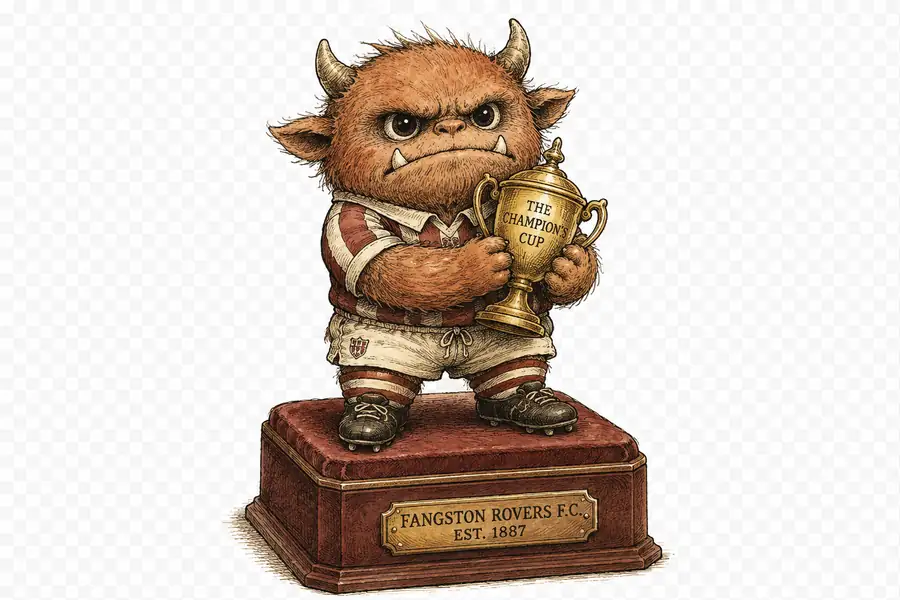
A fanged plush monster the size of a forearm stands in a miniature kit and boots, both paws wrapped around a gold replica of the World Cup trophy. This, not a jersey and not the watch that used to sit beside that trophy, is the breakout object of the tournament. Pop Mart stitched FIFA’s badge onto its Labubu line, and the collection sold out across more than forty countries on its first day. What fans are chasing this summer hangs on a shelf, not on a back.
The price ladder explains the rush. The hero piece, a vinyl plush retailing around $150, anchors a range that steps down to keychains and blind-box trinkets. The blind box is the engine: you pay before you know which figure is inside, a mechanic Pop Mart borrowed from the gachapon capsule machines of Japan and now runs in dozens of countries at once. A replica jersey, by contrast, restocks forever.
Here is the part the cameo coverage missed. The toy did not stay on the merchandise table. Two performers in Labubu costumes, one in Argentina’s kit and one in Mexico’s colors, walked the opening ceremony in Mexico City, the first original Chinese IP invited to a World Cup opening in the tournament’s history. Labubu also turned up in FIFA’s official tournament music video, the first time a designer toy brand had appeared in an official FIFA World Cup music video. Chinese fans, whose national team did not qualify, joked that other countries start Messi while they start Labubu.
While the toy walked on, the prestige object walked off. Hublot, FIFA’s official timekeeper for sixteen years, quietly ended the partnership in December 2025, leaving the luxury-watch slot empty for the first time since Seiko claimed it in 1978. FIFA left the prestige slot vacant; separately, a licensed-timepiece tier — a category new to its official products program — went to Axia Time, a New York microbrand. A blind-box plush now holds the cultural ground the Swiss house walked away from.
The signal a fan buys at this World Cup is acquisition, not allegiance.
None of this is new, and that is the point. In 2002, Marc Jacobs commissioned Takashi Murakami to reimagine the Louis Vuitton monogram, whose grinning flowers and cartoon eyes turned a luggage pattern into one of the decade’s most coveted handbags. The lesson the trade took away: a cute character on a desirable object, released in a finite run, becomes the version people want. Pop Mart’s addition is the blind box, which moves the gamble from the resale market to the cash register. Murakami made you covet the bag; Pop Mart makes you covet the one you cannot see yet.
Pop Mart can afford to put a plush where a Swiss watch used to be. The company booked $5.16 billion in 2025 revenue, up 184.7 percent, and the Labubu line alone moved more than 100 million units that year. The jersey is not dead; soccer-related products on TikTok Shop US posted 527 percent average order growth in the opening week, mostly fan-made graphic tees rather than licensed kits, a frenzy of its own. But the kit sells belonging, and belonging is cheap. The object that sold out in a day trades on scarcity, and at this World Cup, scarcity took the stage.