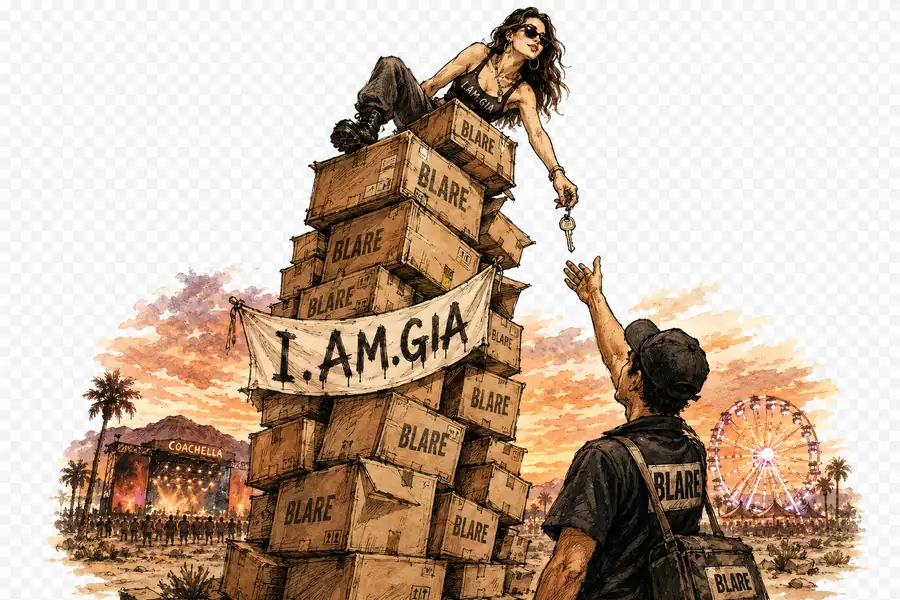
I.AM.GIA Bet a House on 300,000 Tracksuits. Coachella Is the Next Wager.
I.AM.GIA's founder sold her house to fund 300,000 unsold tracksuits, manufactured the demand to match, and rode it to a million units in five months. Now she is buying cultural relevance at Coachella, inverting the lean-DTC orthodoxy that treats a full warehouse as the thing most likely to kill you.
Sir John Crabstone
The founder of I.AM.GIA sold her house to buy 300,000 tracksuits of a style that had only begun to sell. She placed the whole bet in a single order. Within five months the label had moved a million of them, in forty-four colours. Alana Pallister is now at Coachella, spending the proceeds on relevance. Lean retail holds no stock it has not already sold. She inverted the rule and put her house behind it.
Name the doctrine she broke. A decade of direct-to-consumer teaching told founders to hold as little stock as possible and let scarcity do the selling. The full warehouse was the enemy. None of this troubles I.AM.GIA. Its 2018 Pixie Coat, a $120 teddy jacket, ran the same play at a smaller stake: build one item into a necessity, then watch demand arrive.
The lean operator forecasts demand and orders to meet it. Pallister reversed the order of operations. She bought the stock, then asked her team to make the Blare ten times more viral for Black Friday. They seeded it across TikTok Shop affiliates until the roster grew from a few hundred to twenty thousand in a single week. Demand, in this method, is not discovered; it is commissioned.
The celebrated account omits why she did it. The business had fallen on harder times under a leadership team that, by her own telling, did not fit; the tracksuit bet, she says, saved it. The company could not underwrite a bet that size. Her house could. Strip the triumph away and a plainer scene appears: a founder selling her house to climb out of a hole she was already standing in.
Coachella is the same instinct aimed at something softer than stock. The label dressed the rapper Sexyy Red in tracksuits stitched with her own name, drove seventeen creators out to the desert and gifted more than a thousand more. The attention came: earned media value rose 121 percent from the first half of last year to the second. It is already selling Sexyy Red merchandise on the festival grounds, racing to convert the moment into sales before it passes. A markdown can clear unsold tracksuits; nothing clears an unsold moment.
Nerve and folly look alike until the receipts arrive.
The trade reads this as a method, the opening move in a career of engineered virality. It is the reading survivors always get. An orthodoxy is the record of everyone who tried the bold thing and was not saved. The doctrine Pallister broke was written by founders who made her exact bet and drew no rescue. Their stock sits in a warehouse, their names absent from the celebration. She sold her house and the order came good. The next founder will read that as a plan.