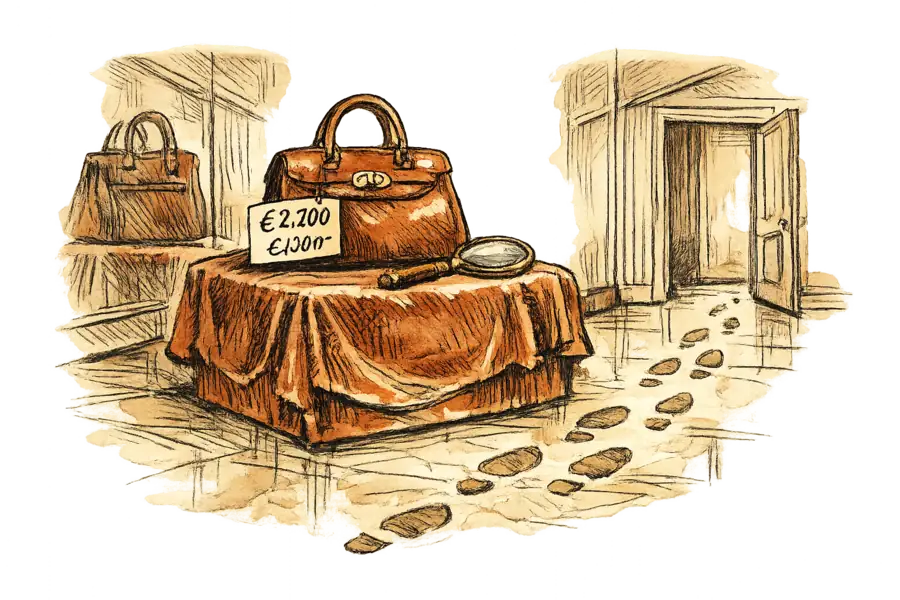
Luxury Read The Macro. The Customer Read The Bag.
Alessandro Maria Ferreri argues post-pandemic luxury raised prices on the assumption customers could not tell the difference; Bain's contraction figures and fifty million missing buyers agree. The slowdown is a strategy failure that macro explanations have obscured.
Sir John Crabstone
Alessandro Maria Ferreri has named what the quarterly calls were built to obscure. Post-pandemic luxury did not catch a cold from China; it raised prices on the assumption that its customers had forgotten how to look at a bag. The word for what followed is not slowdown. It is “crisis of truth.”
His example is the right one. A wealthy client will not pay 2,200 euros today for the bag she paid 1,200 yesterday. She is asked to locate the additional thousand somewhere on the leather. She cannot. Excellence did not move; only the sticker did. Ferreri’s word for what was transacted is “financial predation.”
The customer he describes is a reader. She compares leather and finish on her phone before she enters the boutique; she has the competitor’s atelier open in the next tab. The houses raised prices into a generation that had been promoted, while no one was watching, from buyer to auditor. They traded on her trust and counted on her not to check.
The accounts have caught up with her. Bain reported personal luxury goods falling from €369 billion to €364 billion in 2024, the first non-pandemic contraction in fifteen years. The revenue dip is small. The constituency beneath it is not.
Roughly fifty million buyers walked away last year, by Bain’s spring count. The houses lost an audience the size of Spain. They lost it to no rival. They lost it to themselves, the slow way: a walk-out at a time.
The accepted explanation has been macro. China cools; Asia tightens; tariffs threaten. The pressures are real, and they are alibis. Miu Miu rose 105% in Q3 2024 inside the same macro climate the rest of luxury blamed for its losses. Hermès raised prices and grew; Kering’s Gucci-led group raised them and lost double-digit revenue. The macro fell on both. One side had built the bag the customer was willing to read past the price for.
Ferreri’s reading of why this happened is sharper than the macro story. Luxury moved from a supply-driven industry, where the designer dictated taste, to a demand-driven one in which the customer holds the keys to the studio. Six to eight collections a year was workable when the house set the calendar. It was never going to hold when the feed did.
Each acceleration was a margin decision defended at the board with a slide. The customer did not see the slide. She had the bag in her hand.
Pricing power, on inspection, was a hypothesis about the customer’s attention; the customer disproved it last year.
Recovery will not be paid for in marketing budgets. It will be paid in the older currency the houses had quietly stopped issuing: a piece of work that justifies the line on the receipt. The macro will lift again; that is what macros do. Whether the customer returns is a separate question. She has been promoted to auditor, and she will read the verdict before she settles the bill.