Malaysia's Fight With Foreign Platforms Runs Through Foreign Platforms
A Malaysian MP wants SARA essentials aid spendable with local sellers on Shopee and TikTok, and TikTok Shop already funds discounts and fee cuts for an online Rahmah sale with the domestic trade ministry. If the promised bill on foreign platforms defines local sellers, the test could turn on where they register and where their stock sits.
Sir John Crabstone
Malaysia’s budget promised an e-commerce bill to address unfair competition from foreign firms, The Star reported. One governing-coalition MP now proposes sending the state’s aid for essentials through Shopee, owned by Singapore’s Sea, and TikTok, owned by China’s ByteDance. In this argument, “local” describes the seller, not the marketplace.
Khoo Poay Tiong, the DAP member for Kota Melaka, made the case in the budget debate on 20 October. Sin Chew Daily headlined the speech around Pinduoduo’s push into local e-commerce. Anwar, Khoo said, has promised to legislate against the threat from overseas platforms, but legislation takes time. Until then SARA, the state’s credit for basic goods, should reach local merchants online; Shopee alone, by his count, has 500,000. He also proposed turning the domestic trade ministry’s Rahmah discount-sale budget into e-vouchers.
SARA is spent in shops today: 15,000 participating outlets, 6,800 of them small grocers and cooperatives. Next year, Bernama reported, up to nine million cash-aid recipients will receive as much as RM150 a month in SARA. The budget widens it to 216 FAMA farmers’ markets and more small grocers. Khoo would add Shopee, TikTok and other platforms.
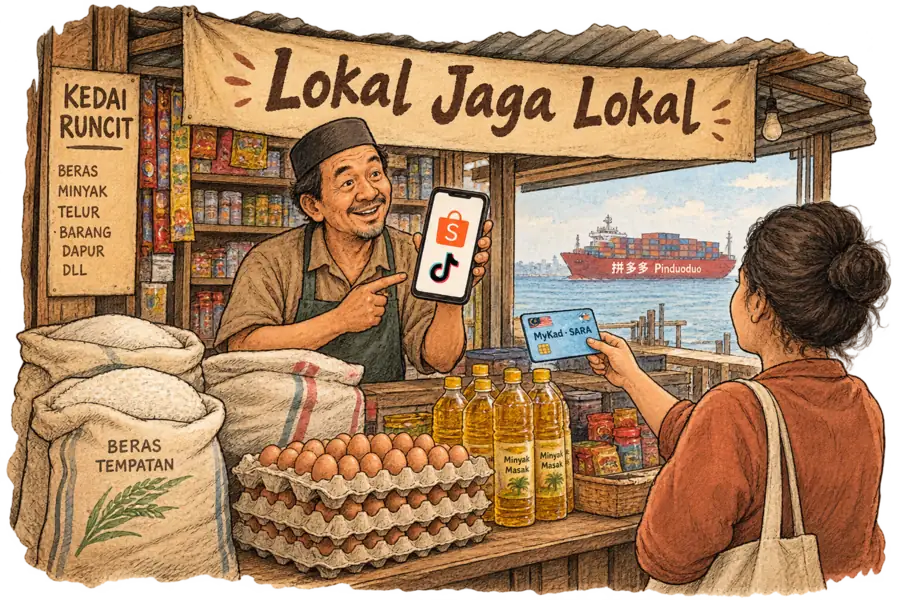
An online Rahmah sale already exists, and TikTok helps fund it. On 30 June, Bernama reported, TikTok Shop became the first platform to host one. Its RM180 million covers vouchers of up to 30%, zero commission in 56 subcategories and a RM2 shipping rebate per order. The sale itself lists 75 products from HeroMarket and KedaiFGV. Armizan Mohd Ali, the domestic trade minister, said there had been calls to take Rahmah online, but the state must weigh “the resources available”. TikTok, he added, pioneered an online sale before the government rolled out its own. He spoke while opening JomLokal 2026, the Lokal Jaga Lokal Festival; the slogan means, roughly, local looks after local.
The Pinduoduo in question is PDD’s own Chinese app. Malaysians have bought from it, directly from Chinese sellers, since a December 2025 campaign. It is not a registered company in Malaysia, The Edge reported, while Shopee, Lazada and TikTok Shop run warehouses and employ Malaysian staff. The quarrel is billed as Malaysia against foreign platforms. All four are foreign; Lazada, for one, is backed by Alibaba. By The Edge’s account, only Pinduoduo has not moved in.
Ministers frame the target as sellers rather than apps. In August the deputy finance minister, Liew Chin Tong, wrote of meeting Shopee, TikTok Shop, Lazada and Grab over cheap imports. The platforms, he said, had promised closer supervision of their merchants, Malaysiakini reported. The coming bill, he added, would close the regulatory gap between local merchants and foreign sellers.
Shopee’s own fee schedule separates sellers the same way. Its marketplace commission applies only to “local Marketplace sellers”; Shopee Mall and overseas sellers have their own rates. Local marketplace sellers pay no commission on rice or eggs, though the page does not say what makes a seller local.
A merchant is local by registration; a platform becomes local by expenditure.
Anwar’s announcement, RinggitPlus notes, named neither the platforms covered nor a start date. The 10% sales tax on items of RM500 or less bought online from overseas already sorts goods by origin. If the bill defines local sellers, the likeliest tests are where they register and where their stock sits. The warehouse test has a gap: Anwar has complained of foreign investors renting space at Port Klang with “no local job creation”.