Meta Sits on Both Sides of the Influencer Deal
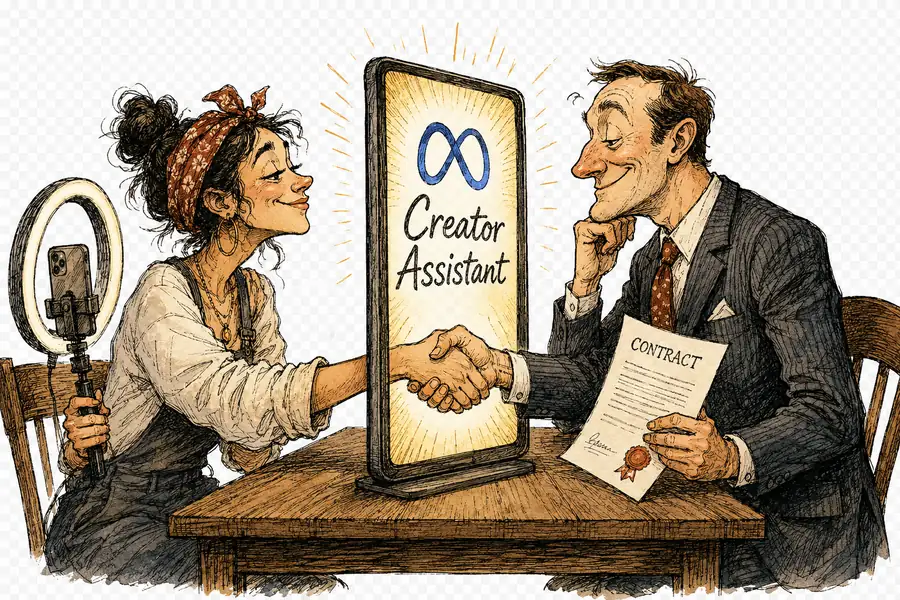
Meta's new Creator Assistant advises creators on their own performance while its Partnership Ads tools let brands find, rank and convert those same creators into ads. With software on both sides of the influencer deal, the terms beauty and apparel bargain on are increasingly set by the platform rather than either party.
Sir John Crabstone
On 4 June, Meta handed Facebook creators a Creator Assistant, a conversational AI that explains why one reel outran the rest and when to try the next angle, rolling out first across the US, Canada and India. It built the brand-facing half six months earlier. The influencer deal that beauty and apparel run on now has software on both sides, and the software answers to neither party.
The brand-facing half is the blunter one. The Partnership Ads Hub, launched in December 2025, surfaces creators who already tag or mention the brand; advertisers review their performance metrics inside the dashboard, and the posts that already work become ads. A Partnership Ads API converts that existing branded content into partnership ads at scale. By Meta’s own count, those ads cost 19% less per customer acquired. The brand once courted a creator; now it runs a query.
Set the two halves beside each other. The creator is taught to chase the numbers Meta reports; the brand buys from the list Meta ranks; the fee either side can command rests on metrics only Meta holds. Her leverage was always her audience; now the platform interprets that audience back to her. The bargain is still struck between people. The terms were set before they sat down.
A broker who briefs both sides of a deal has stopped being a broker.
This lands on beauty and apparel first. No two categories are more exposed. They are built on creator deals, where a foundation shade or a denim cut sells on a face the brand rents by the post. The Assistant has reached only Facebook so far; Meta has already promised one for Instagram’s Edits app, which is where those faces have always been.
None of this is concealed. The coverage frames it as friction removed: creators who finally grasp their own numbers, brands who stop guessing. YouTube and TikTok offer creators comparable performance tools; what neither offers is the same company running both sides of the table. Meta will keep calling the Assistant a partner to the creator and a discovery engine to the brand, and both will be true. Software that optimises a deal will optimise it for whoever owns the software.