For Meta, the Model Was the Easy Part
Meta's first Superintelligence Labs model ships into five consumer surfaces no rival can buy. Brand discovery in consumer AI stopped being a search problem.
Sir John Crabstone
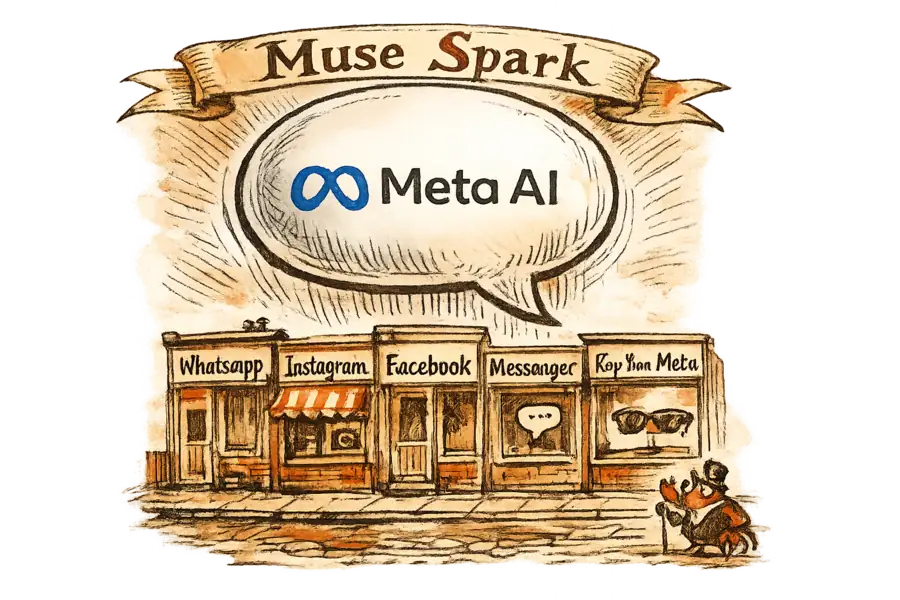
Meta launched Muse Spark on April 8, the first model from its newly formed Superintelligence Labs. By the end of the rollout it will run inside WhatsApp, Instagram, Facebook, Messenger, and Ray-Ban Meta. Rival AI labs have spent a year asking where the next billion users will come from. Meta skipped the question.
The model itself is competent rather than extraordinary. Alexandr Wang’s first release is multimodal and fast, with Instant and Thinking modes and parallel subagents. TechCrunch called it a ground-up overhaul of a stack that had lagged OpenAI. That is the wrong place to look.
Each of those five surfaces is a monopoly Meta already paid for. WhatsApp alone clears three billion monthly users. Meta AI, ambient across all of them, is now at a billion. No venture round buys that.
Ray-Ban Meta is the oddest entry on the list and the most telling. Every other AI company is still leasing a phone OS or shopping for a headset partner. Meta has frames on shelves today and a model shipping into them next.
Consider the Shopping mode Meta released alongside the model. Ask Muse Spark what to wear and it does not scrape the open web for a product catalogue. It draws from creators and communities across Meta’s apps — the same storytelling advertisers already buy against.
The recommendation engine’s training signal is the content library Meta is paid to host.
For a brand, the consequence is administrative. Discovery inside Muse Spark is decided by the creators you already court on Instagram. The posts your communities produce on Facebook close the gap. ChatGPT requires a content strategy aimed at a crawler you will never see. Muse Spark rewards what a competent brand manager was already buying.
Note what Meta did not do. Llama was its gift to the developer economy, released as open weights, free to finetune. Muse Spark is closed, though Meta says it hopes to open-source future versions. The first proprietary Meta model in years is the one that runs inside the apps that sell things.
Consumer AI coverage still treats the model as the contest. It rarely is. Fenty’s beauty advisor landed on WhatsApp for a reason: the surface decides who the customer meets first.
John Lewis paid for distribution twice, plumbing ChatGPT and Gemini into an £800 million overhaul. Meta’s surfaces are where those shoppers already are.
A brand cannot negotiate its way into Muse Spark. It negotiates its way onto Instagram. The model follows from there.