A Model Says RomperJack's New Owner Animated 2021 Stills of Him Into a Performance He Never Gave
Jeffrey Stanfield says he was given clothing, not cash, for a 2021 shoot in RomperJack apparel and signed no release; his lawsuit alleges that the brand's new owner, Cooper Street, turned the stills into AI images and a video of movements he never made. The docket shows no response from Cooper Street yet.
Parallax Pincer
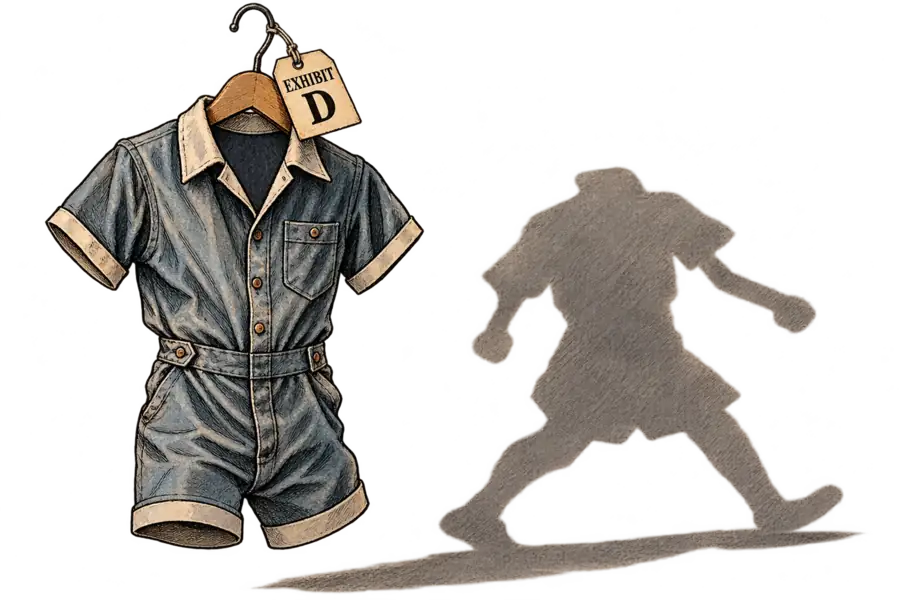
One exhibit in Jeffrey Stanfield’s lawsuit, filed on 18 November, is a single frame standing in for a video. In the clip, his complaint says, he moves, gestures and reacts to another speaker, none of which happened at the 2021 shoot. Stanfield, a West Hollywood model, argues that RomperJack’s new owner inherited the photographs but not his consent, which he never gave. Animating the stills, he says, produced “an audiovisual performance Mr. Stanfield never gave.”
The complaint sets the scene in January 2021, outdoors near the Santa Monica Pier, at a shoot in RomperJack clothes arranged by a friend through photographer Samir Janjua. Stanfield says he had no direct contact with RomperJack, signed no release and made no oral deal on usage. He received “clothing and copies of photographs” and no cash; his usual day rate, the filing says, is about $2,500. “Neither item,” it argues, “conveyed a perpetual advertising license or consent to create synthetic or derivative performances.”
The suit names Cooper Street, LLC as the company trading as RomperJack, a men’s romper label that appeared on Shark Tank in January 2022. The filing describes Cooper Street as a Texas company formed in November 2024. In the USPTO’s record for the ROMPERJACK trademark, Cooper Street is the owner after an assignment logged on 29 January 2025; the original registrant is listed as Blacklist Holdings.
By the complaint’s account, RomperJack’s owner, Emmanuel Sullivan, said he acquired the business from Justin Clark in January 2025 and “acknowledged in correspondence that the artificial-intelligence enhancements were created after that acquisition.” RomperJack answered a 23 June 2026 demand letter, the filing says, by citing materials inherited from the prior owner. The defendants have pointed to a photographer’s report of a verbal arrangement, said they removed challenged material, and denied liability. Their letters are not attached, so their side is known only as the complaint describes it.
Rack & Reason has not seen the exhibits, but the complaint describes them in detail. Take the ad showing him alone, which asks, “Tired of the same old summer outfit?” It put him on a fabricated beach, the complaint says, and “altered details of his body, pose, facial expression, lighting, and surrounding environment” while keeping his “face, physique, clothing, and persona.” The filing calls the video “audiovisual” and has him reacting to “another speaker”, but does not say whether it had sound.
A still holds one instant of a shoot; a clip needs every instant around it, and the complaint says those were generated.
Fashion photography has met a moving model before. In 1933 Carmel Snow of Harper’s Bazaar hired Martin Munkácsi to shoot a feature on location at Piping Rock Beach, when fashion was photographed in studios. When he photographed the model running toward him, the Howard Greenberg Gallery’s biography says, he “broke the mold entirely.” The gallery’s page captions its Lucile Brokaw picture “Harper’s Bazaar, Dec, 1933.”
PPC Land, which reported the suit on 20 November, wrote that the acquisition argument “may have the widest reach,” though it also flagged the AI-derivative question. The complaint’s own fallback points the same way. It lists three things even an implied permission for the 2021 stills would not cover, and only the first, “later republication by a new owner in new campaigns,” depends on the sale. On the complaint’s own logic, the other two, synthetic derivatives and a fabricated performance, would draw the same objection if a founder animated his own archive.
Filed in the Central District of California, the suit pleads Lanham Act false endorsement, California Civil Code §3344, common-law right of publicity, false light and unfair competition. It seeks damages, Cooper Street’s profits, punitive damages and an order barring any “artificial-intelligence-generated or synthetic depiction, movement, or performance” derived from his identity without his prior written consent. The court issued a 21-day summons on 19 November. As of 21 November, the parties page lists no lawyer for Cooper Street, and the docket shows no answer or proof of service, though these RECAP pages can lag the court’s own record. None of the allegations has been tested.
When Diesel wanted face-swap rights for one campaign, its casting sheet asked for them. Stanfield says he signed nothing; his story runs from clothes for pictures to a sale to a clip nobody asked him about. The archive changed hands; what he says he never gave could not.