Nine Fabrics Are DPP-Ready. The Verified Layer Is the Chokepoint.
World Collective's DPP-ready textile library puts nine verified fabrics online and reframes EU compliance as a structured-data problem. Whoever owns the verified material-data layer will sit at the chokepoint of European sourcing.
Neritus Vale
On May 21, the sourcing platform World Collective, working with Kinset for DPP infrastructure, put nine fabrics online and described them as the first DPP-ready textile library verified to the standard the Digital Product Passport is converging on. Nine, against the roughly 600 materials the platform already carries, is not a market. It signals where the market is about to move, because the rule that takes hold around 2028 is, beneath its sustainability language, a demand for structured data: fibre composition, construction, traceability from raw material to finished cloth, environmental footprint — each field verified rather than asserted. Whoever holds the verified version of that record for a given material will command the chokepoint every European brand has to clear. The regulation manufactures a new asset, the verified record of a textile, which did not trade as a thing of its own before. Compliance has stopped being a back-office chore and become a contest over who owns the data.
The Passport’s discipline, from the standpoint of whoever sells the data, is that it is finite. A Swedish pilot, Trace4Value, developed with TrusTrace, GS1, and the Swedish standards institute, settled on 126 data points for a textile passport, from fibre content to end-of-life routing. A number that exact is an invitation: it tells every vendor what to build and every brand what it will be asked to produce. The hard part was never deciding what to collect. It is verifying that each answer is true, traced from raw fibre to finished cloth rather than typed into a spreadsheet. That is the work World Collective says it has done for nine of its fabrics, and the reason it has done it for only nine.
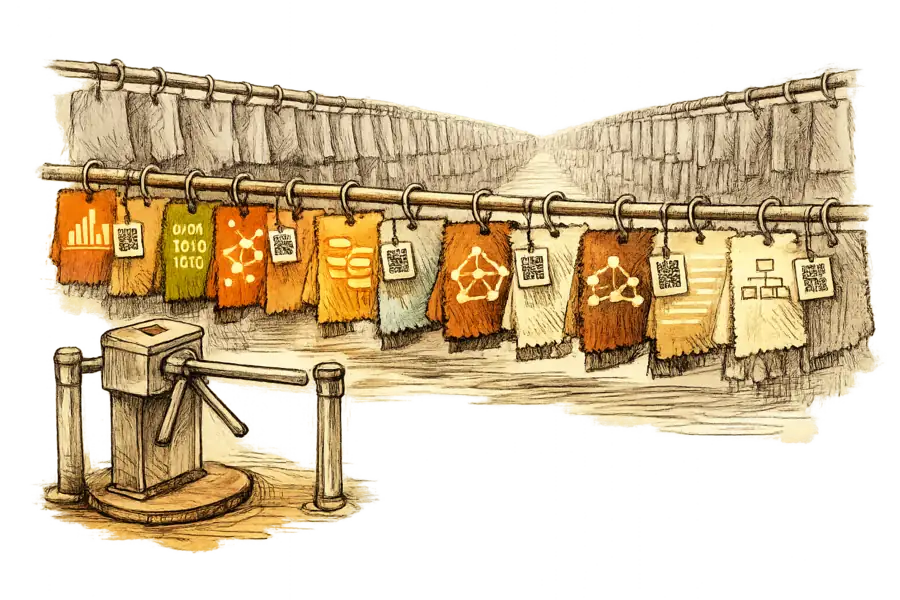
What makes this a chokepoint rather than a database is that the verified record travels with the sourcing decision, not after it. A brand picks a fabric on the platform and the passport comes attached, already structured to the format, each field marked for how complete it is. World Collective states the logic plainly: the compliance burden “moves out of the brand’s back office and into the supply chain itself, where the data actually originates.” That is a transfer of work, and with it a transfer of leverage. A fabric anyone can weave is a commodity; the verified, regulator-shaped record of that fabric is not, because reproducing it means repeating the audit. CEO Jeanine Ballone calls getting a material to DPP-ready “hard work,” and that cost is exactly what a brand pays to skip by sourcing through the firm that already absorbed it.
Verification, not the cloth and not the file format, is the thing that does not commoditise.

The strongest case against any single owner is that Brussels designed the Passport to have none. The EU’s architecture, developed through the publicly funded CIRPASS projects, is built for interoperability: product data held by the firms that generate it rather than pooled in one central registry, with pilots running across multiple value chains. Separately, the Trace4Value initiative — a Vinnova-funded Swedish industry effort, not the EU’s official standard — produced a textile data protocol any company can adopt for free; the Delegated Acts that will set the binding schema are not expected until 2027. For the thesis to fail, verifying a material would have to become as cheap and fungible as the schema that describes it, because then any supplier could mint its own trusted record and the layer would be a commons. That is the one condition that dissolves the chokepoint, and it is the one the evidence does not yet meet. An open schema standardises what a passport must say; it does not certify that a supplier’s recycled-content claim is true. Nine verified materials out of roughly 600 is what the price of certainty looks like before anyone has automated trust.
For a brand sourcing in Europe, the Passport turns into a choice it has not had to make before. It can build the verified layer itself, auditing every supplier from raw fibre through finished cloth, or it can rent another firm’s record and take on the dependency that follows. Renting is cheaper until it is not, because switching verified-data providers means paying to verify the same materials twice. World Collective is not alone in wanting that seat, since TrusTrace and Retraced are building toward the same layer from the compliance-reporting side rather than the sourcing one. What it did first was bind the verified record to the moment a fabric is chosen rather than the moment a report is filed, which is where sourcing leverage sits. If the 2028 deadline holds and verification stays this dear, the contest now opening was never about cloth but about who keeps the record of it.