Otto Lent ChatGPT 19 Million Products. The Till Stays in Hamburg.
Otto's new ChatGPT plugin advises on more than 19 million products and sends shoppers to otto.de to pay, and Otto has run ChatGPT ads since September. Real-time stock and prices for agents, and the power to order, sit on Otto's list of things to come.
Sir John Crabstone
Otto has lent ChatGPT its catalogue and kept its till. On Tuesday the Hamburg retailer announced a plugin that shoppers install from ChatGPT’s “Plugins” tab and summon with “@OTTO” for advice on more than 19 million products. Payment, and any assembly or installation services, are still settled on otto.de. Otto bills the launch as a step towards “agentic readiness”. What an agent would need to finish a purchase itself, Otto files under later.
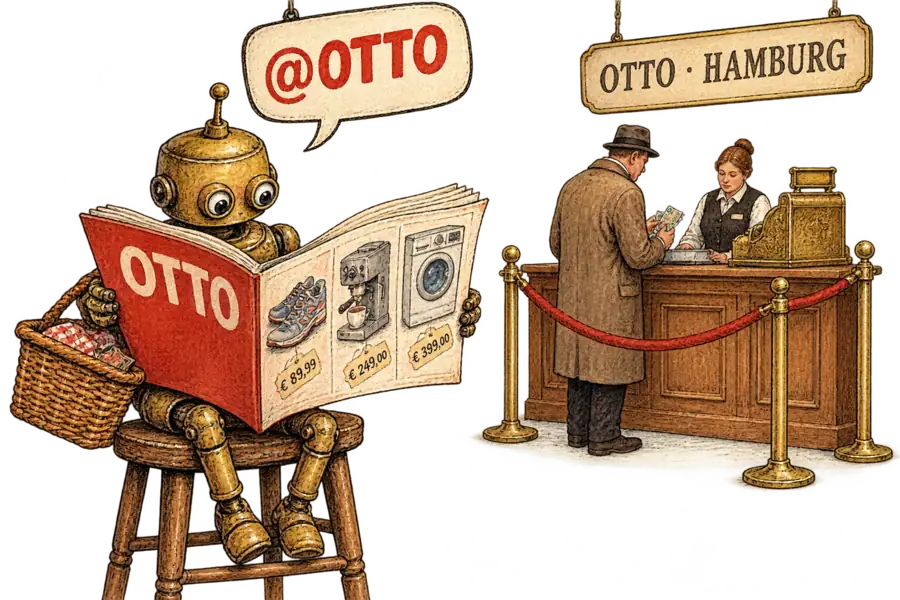
The division is older than the software. Otto’s first catalogue appeared in 1950 in a run of 300 copies and offered 28 styles of shoe on 14 pages. The plugin revives that arrangement: the browsing happens elsewhere, and the order comes home.
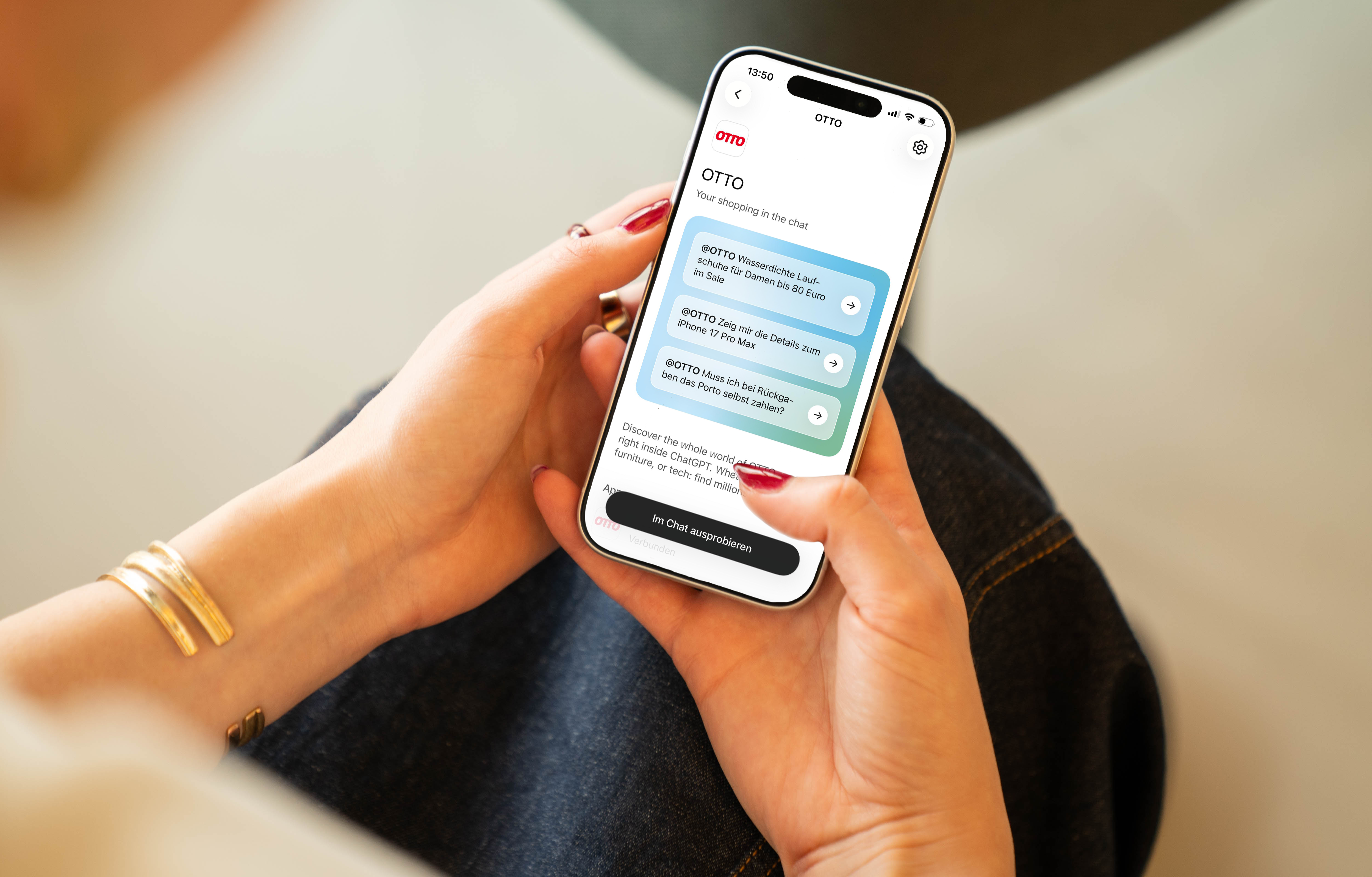
Shoes still lead. In a picture Otto issued with the release, the first of three suggested prompts asks for women’s waterproof running shoes up to €80, in the sale.
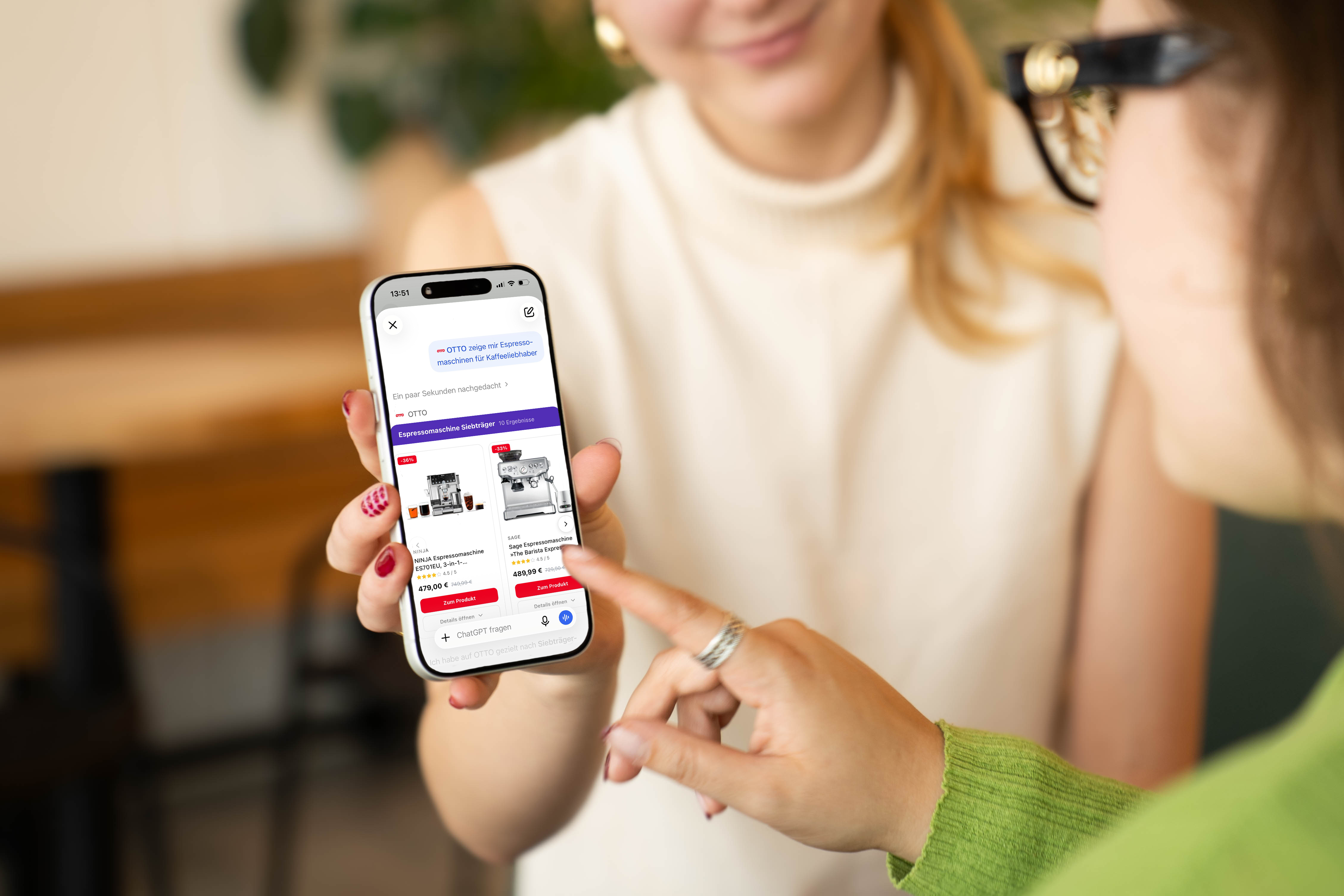
The answers come priced. In Otto’s second picture, a request for espresso machines returns cards showing sale prices, with the old prices struck through. Each carries a button marked “Zum Produkt”. The screenshot is cropped, with two of ten results in view and the “Details öffnen” panels closed, and nothing visible on the cards mentions stock. Otto does not say how fresh the prices are.
Maurizio Giuri’s report for TextilWirtschaft opened with Otto letting AI agents into its range. For now they get as far as the range. The plugin rests on a Model Context Protocol endpoint built by Otto Group one.O, the group’s technology and consulting partner. Looking ahead (“perspektivisch”), Otto says, agents could check stock and current prices in real time, place orders or amend invoices in the ERP system. Otto calls the plugin a test, and says it has been talking to the relevant protocol providers for some time.
A shopper can take a price as an invitation; an agent spending someone else’s money needs a promise.
OpenAI drew this line itself on 24 March, when it conceded that its first Instant Checkout lacked flexibility. Merchants, it wrote, may now “use their own checkout experiences while we focus our efforts on product discovery.” Walmart’s app, unveiled that day, leads from ChatGPT into a Walmart environment with account linking, loyalty and Walmart payments, on the web first. Otto’s is the merchant-run version OpenAI now endorses: ChatGPT gets the question, and otto.de gets the order.
Otto also pays to be seen there. It says it has run ChatGPT ads since September as one of the first test partners in Europe. It calls the first results promising, without a figure, and is now assessing long-term use. It is more forthcoming about its own voice assistant, which it credits with order values up to 37% above ordinary search, at double the conversion. Frederike del Castillo says that a clear separation between organic recommendations and paid visibility is decisive for Otto.
That first catalogue also came with credit. Customers paid on invoice, under the motto “Vertrauen gegen Vertrauen”: trust for trust. Seventy-six years on, Otto will lend an agent the catalogue. The till is still marked “perspektivisch”.