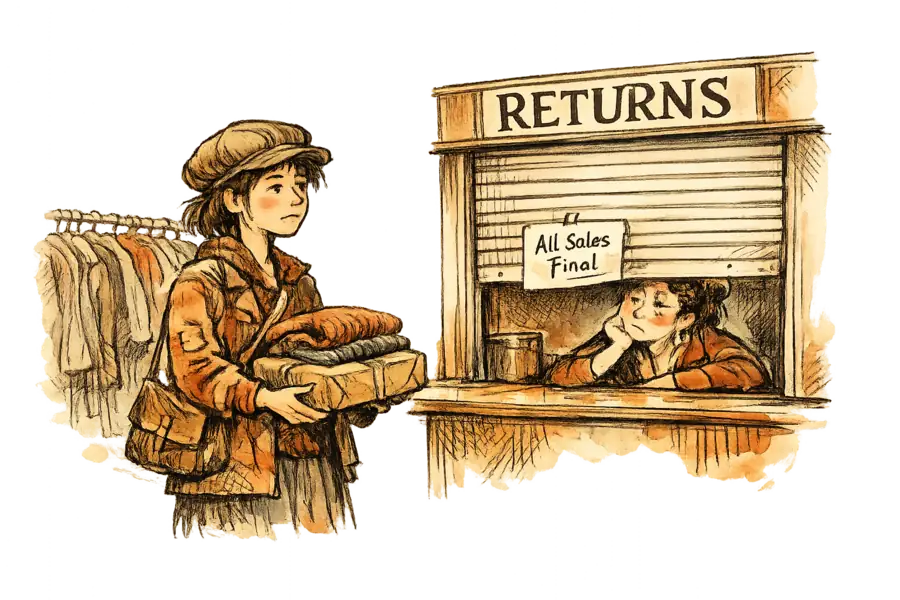
Resale Won Gen Z. One Bad Refund Hands Them Back.
Gen Z buys more secondhand than any other cohort, then drops a brand after a single poor refund. Resale's growth ceiling is reverse logistics, not discovery, and the unglamorous refunds rail is where secondhand loyalty is won or lost.
Sir John Crabstone
Resale has a growth ceiling, and it sits where the quarterly decks rarely look. The bottleneck is not supply or discovery; it is the refund. Gen Z now buys secondhand online more than any other cohort, 57.4 percent in the past year, and 57.1 percent have abandoned a brand after a single poor return. A further 61.2 percent walked away from a purchase before buying, put off by the return policy itself. The generation that made resale is the readiest to leave it.
The prize is not modest. US resale grew nearly four times faster than the broader clothing market last year, and ThredUp, a publicly listed resale platform, projects it will reach $78.8 billion by 2030. That sits inside a $393 billion global secondhand market, with Gen Z and millennials driving 71 percent of the growth. The trade’s banner reads AI-driven discovery, and the money follows it into authentication and the feeds where nearly half of secondhand hunting begins. Finding the customer was never the hard part. Holding on to her is, especially as Gen Z trades the haul for the holy grail.
Reverse logistics is where the model fights itself. A returned secondhand item is not restocked but graded and listed afresh, and may never fetch its first price again. Each item is one of one, often consigned or sold peer to peer, so the unit economics punish a generous refund. Discovery demos well in a pitch; a returns desk does not, which is why one is funded and the other tolerated. The result is a trade quietly built to discourage the thing its customers most want.
StockX shows the logic in the open. Its return policy is tiered: eligible items may be returned within fourteen days of delivery for store credit; the rest carry no return option at all. A true refund is kept for the times the platform itself erred — damaged or incorrect deliveries covered under the Buyer Promise. A policy like that reads as prudence on the balance sheet and as a refusal to a teenager. It protects the margin and forfeits the relationship.
The expectation gap is generational. Raised on overnight dispatch and instant refunds, Gen Z brings that clock to the thrift rail. Seel’s survey is blunt: 87 percent expect a problem fixed within two or three days, and 1 percent will wait longer than a week. Amazon set that standard; resale is judged against it. A platform fluent in the perfect recommendation and mute for nine days on the refund has already lost her.
Discovery wins the first sale; the refund wins the rest.
One caution belongs here. Seel sells the post-purchase protection its survey finds in demand, so read the figures knowing who counted them. Even then, 77 percent of younger shoppers say guaranteed protection makes them likelier to buy, and the preference is not Seel’s invention. Brands are spending fortunes to be found and pennies to be trusted. Resale is the one trade where the second purchase was always the only one that mattered.