Most Small Shops Now Have AI. Three in Four Use It for One Task.
The OECD sells its twin transition as the way small retailers keep pace with the chains; its own 2026 survey undercuts the pitch. 61% of small firms now use AI, but 76% are 'novices' running one tool on a single task while large chains wire it through the business — the gap has moved from who owns AI to who can compound it.
Sir John Crabstone
The OECD has given the small shop both a future and a name for it. The twin transition, the digital and green shifts advancing together, is sold as the force that lets the corner retailer keep pace with the chain. The newest figures have the look of the promise arriving, and record the opposite: the advantage slipping to where the small shop cannot follow.
The optimist is not wrong, only early to celebrate. New tools, the U.S. Chamber argues, will give the single-store merchant a pathway to compete with larger players — though the pilots are running with larger merchants first. The pathway is real. It reaches only as far as a shop can run alone, and that is not far enough to move a margin.
Start with the number the optimists like best. Sixty-one per cent of small firms now run at least one AI application, the OECD’s 2026 D4SME survey reports, calling the technology “already widely used” among them. Read alone, that is a divide closing on its own. It is a subscription rate, and a subscription is not a skill.
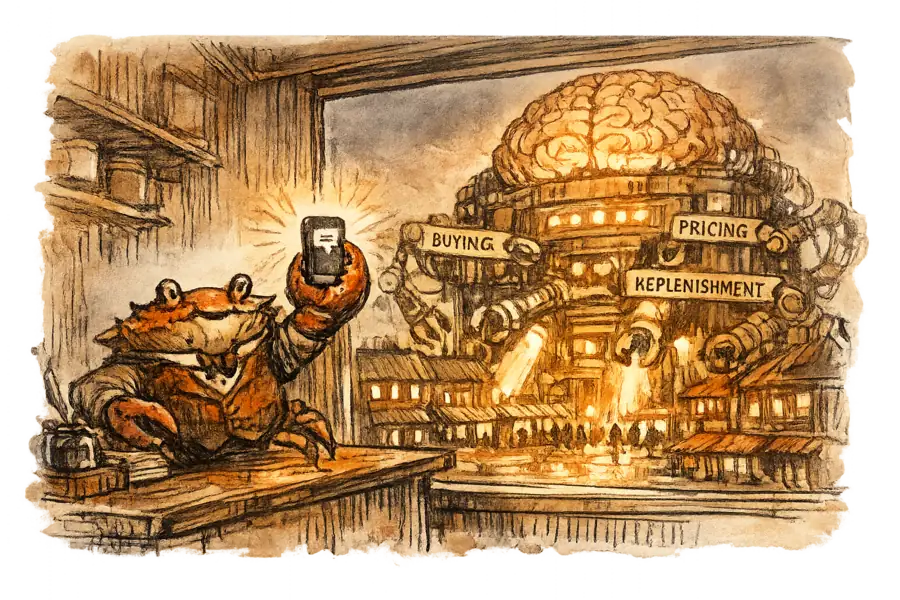
The same survey says what the headline omits. Three in four of those users are “AI novices” in the OECD’s term: firms running an off-the-shelf tool on a single task. A chatbot that drafts product copy is AI. So, in the same tally, is a demand model wired through buying, pricing and replenishment. Both are adoption; only one compounds.
The representative count is harsher than the survey. Across the EU in 2025, 55% of large enterprises used AI against 17% of small ones; Eurostat counts only firms with at least ten employees, and the one-person shop falls below its threshold. The OECD heard from the firms keen enough to answer; the wider count includes the many who are not. Where the chain builds AI in, the shop tries it out.
Price was never the problem. Skill is. Of the EU firms that weighed AI and declined, 70.9% blamed a shortage of skills, not the cost of the tool. A model rented for a few euros a month still needs someone who can use it well, and that someone is the hire the small shop cannot make. The cheap tool and the dear expertise are not the same purchase.
Retail shows how little is being asked. The most common job EU retailers give AI is marketing and sales — the caption, not the cost base. That is the cheapest use to try, and the one least likely to alter the margin. The tool arrives where it changes least.
None of this is new in kind, only in degree. The small shop’s shrinking share of the trade has been counted here before. What the 2026 survey adds is the mechanism: the divide now sits inside the very adoption figure meant to prove it closing.
A tool the whole street can rent is an edge none of them can keep.
The remedy exists, mostly on paper. The OECD finds that 16.5% of small firms have drawn on the public support built for this transition, and that most of the rest never knew it was there. A transition its intended beneficiaries cannot find is a press release with a longer name. The shops were never on the circulation list.