Sora Was a Product. Brands Treated It Like Infrastructure.
OpenAI shut down Sora — app and API both — nearly six months after launch, mid-cycle for creative teams that had standardized on it. The error was not using Sora. The error was treating a vendor's product decision as a stable creative foundation.
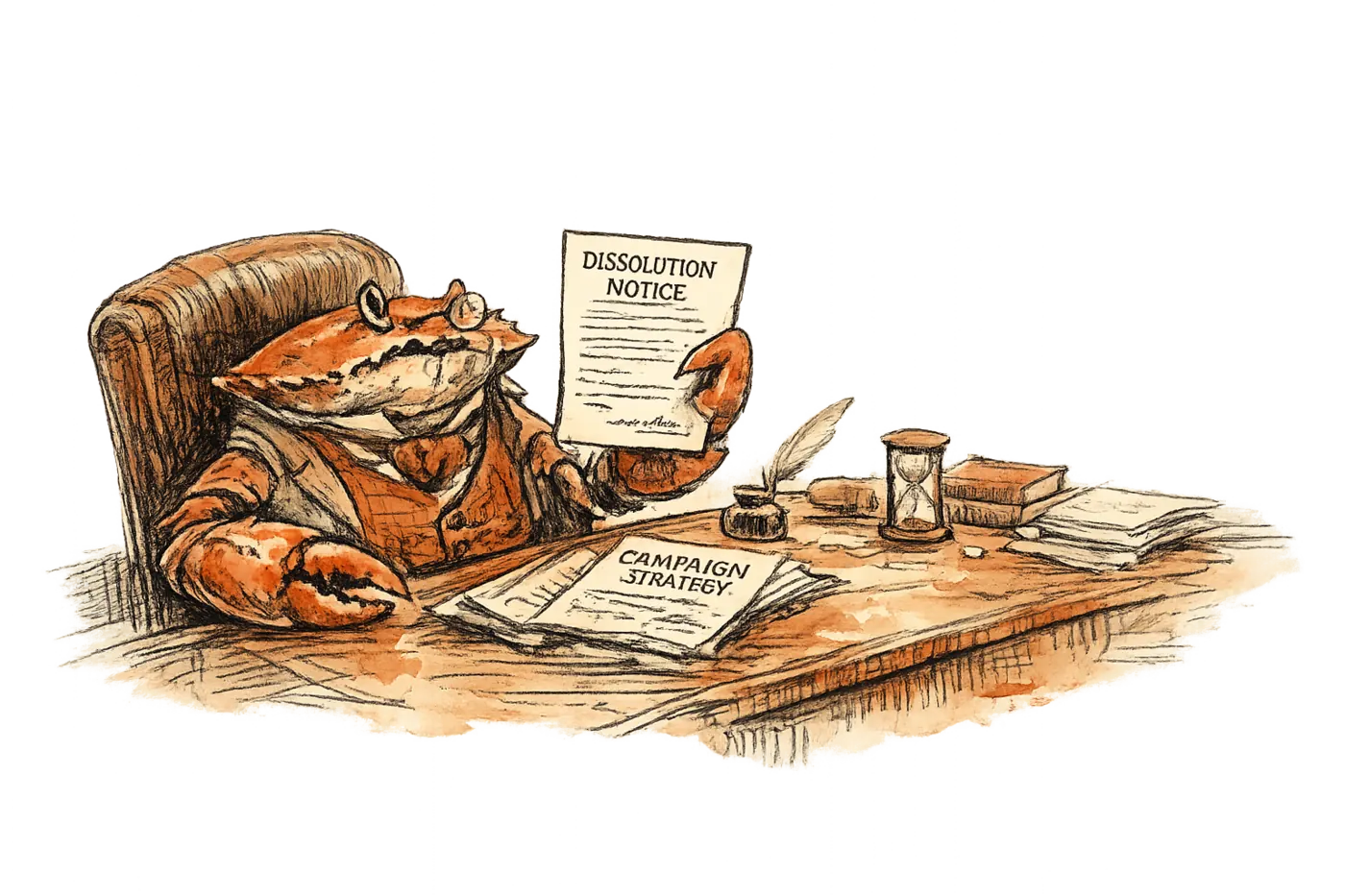
Sir John Crabstone
OpenAI announced on March 24 that it is shutting down Sora — app and API both. The product launched in late September 2025. Creative teams had nearly six months to build around it.
That timeline is the entire argument.
Engadget reported that OpenAI is discontinuing Sora as “compute demand grows” and the research team refocuses on “world simulation research to advance robotics.” Downloads fell 32% month-over-month from November to December 2025, according to analytics firm Appfigures, as reported by Engadget. The company has pivoted toward enterprise customers — coders and analysts — rather than creative professionals. TechCrunch asked whether the shutdown “[could be] a reality check moment for AI video.” By that point, the conditional was doing no work.
The planning error this exposes is categorical. A product is something a vendor discontinues; infrastructure is something you cannot replace in a sprint. The distinction matters most at the moment it becomes visible — which is always the worst moment to discover it.
Disney is the sharpest illustration. The company had committed to a $1 billion investment in OpenAI, with provisions for Disney characters in Sora. As The Hollywood Reporter reported, Disney is now exiting that deal entirely. Teams who built campaign logic around that partnership — contracts, briefs, approval cycles — are recalculating against a blank slate.
The API shutdown deserves separate attention. Brands that built integrations face a different problem: not losing a tool, but decommissioning a dependency. That work takes longer than picking a new platform.
OpenAI’s priorities were not hidden. The company has been reorienting toward enterprise customers and the financial clarity an IPO requires. None of that pointed toward sustained investment in a consumer video product with declining retention. Campaign schedules that assumed otherwise were written against evidence that was already available.
ByteDance’s Seedance is among the nearest credible alternatives at scale. The broader AI video market has its own legal and engineering headwinds. Substitution is not as fast as adoption was; it never is.
Vendor diligence — rights implications, data handling, export flexibility — is now standard practice. Asking whether the vendor’s business model will outlast your commitment is not. Most creative teams have not made that question part of the evaluation. The Sora shutdown is what skipping it costs.
There will be another Sora. The next one will attract months of deep commitment before a product decision redrafts the production calendar. The teams that respond to this by finding a Seedance login have not solved the problem. They have moved it forward by one cycle.