Target Says Your Data Doesn't Raise Its Prices. The FTC Asked Whether They Vary.
The FTC's 28 October orders ask Target, Walmart and seven other companies whether prices vary from one person to the next, and define a price to include coupons and discounts. On personal data, Target's fact sheet denies only that it raises prices, and its own answer on Target Circle says shopping history can help decide which deals a member sees.
Sir John Crabstone
On 28 October the Federal Trade Commission ordered Target, Walmart and seven others to report whether a price “varies from one person to the next based on factors such as participation in loyalty programs”. The inquiry is a Section 6(b) study, with no specific law-enforcement purpose. Target published its answer before the question arrived, and answered less. It denies that your data raises prices; the Commission asked whether they differ.
Asked about the order, Target pointed Retail Dive to a fact sheet dated 15 October. It says Target “does not use personal information to raise prices for guests based on who they are, where they live or when they shop.”
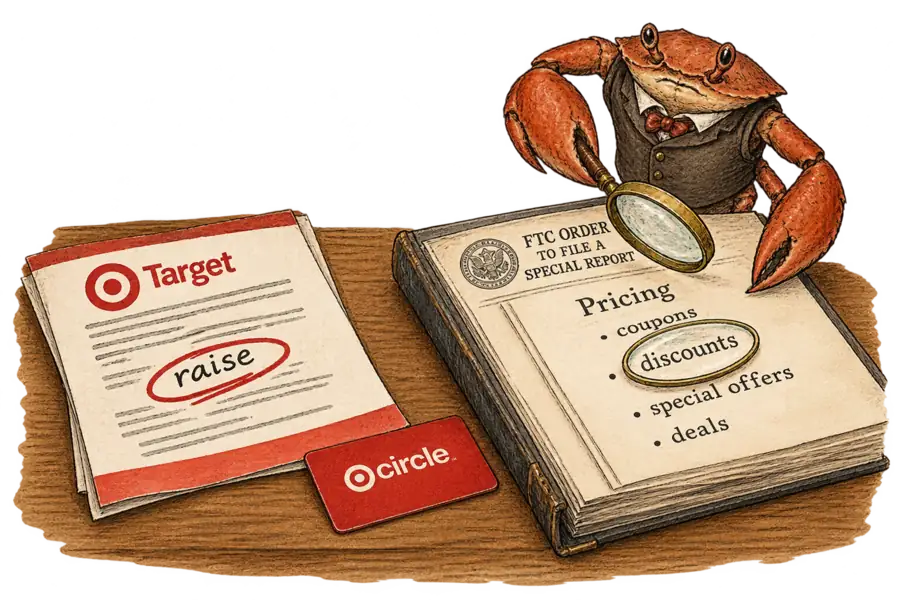
The sheet chooses its verbs with care. On timing, the Q&A says “we don’t adjust prices based on the time of day you’re shopping”. On personal information, it promises only that Target will not use it “to raise an item’s price”. Adjusting runs both ways; raising runs one.
The other way is where the loyalty programme lives. The sheet asks itself whether Circle deals are “specific to me”, and replies that Circle “can use your shopping history to help surface deals and offers that are more relevant to you and that help you save — not to raise your price.” That is a no-raise promise, not a same-price one. Store and digital discounts carry the sentence “the same price applies to all guests shopping in that location or platform”; Circle offers do not. The 5% birthday discount is the sheet’s example of a deal that needs no history.
eMarketer went further than the sheet. It said Target “does not use shopper data to personalize pricing”, under a headline about drawing “a line between personalization and personalized pricing”. The sheet makes no such promise, and the order recognises no such line.
The template order defines “Pricing” to include “coupons, discounts, special offers, promotions” and “deals”. It asks how far each method “increases or decreases prices paid by Consumers”, and how many employees work on “loyalty or discount programs”. Its list of personal information includes “pregnancy status or desire”.
Target knows that entry well. In 2012 The New York Times reported that Target mixed lawn-mower ads into mailers for women its “pregnancy prediction” score had flagged. The coupons worked, a Target executive said, “as long as a pregnant woman thinks she hasn’t been spied on”. She “just assumes that everyone else on her block got the same mailer for diapers and cribs.” Target told the Times that “almost all of your statements contain inaccurate information”.
By one Target executive’s account to the Times, the coupon worked only while its recipient believed the answer to the Commission’s question was no.
The Commission has disowned its last attempt. Its release says the 2024 study “examined only middlemen consultancies” and taught it “nothing about actual pricing decisions”. This time the sellers answer, within 45 days.
Each report must be “subscribed and sworn to by an official of the Company”, and the order says confidential material will be reported “on an aggregate or anonymous basis”. Target’s sworn answer may never appear under its own name; its unsworn one is online, dated 15 October.