TikTok Hands Brands the Till and Bills for the Ad
TikTok's Buy Direct lets brands sell from the For You feed while staying merchant of record, with no published transaction fee, which suggests TikTok's cut sits in the advertising. TikTok has not said whose wallet stores the card, and a developer whose GitHub profile lists TikTok has proposed platform-funded discounts for the Google-launched protocol Buy Direct requires.
Sir John Crabstone
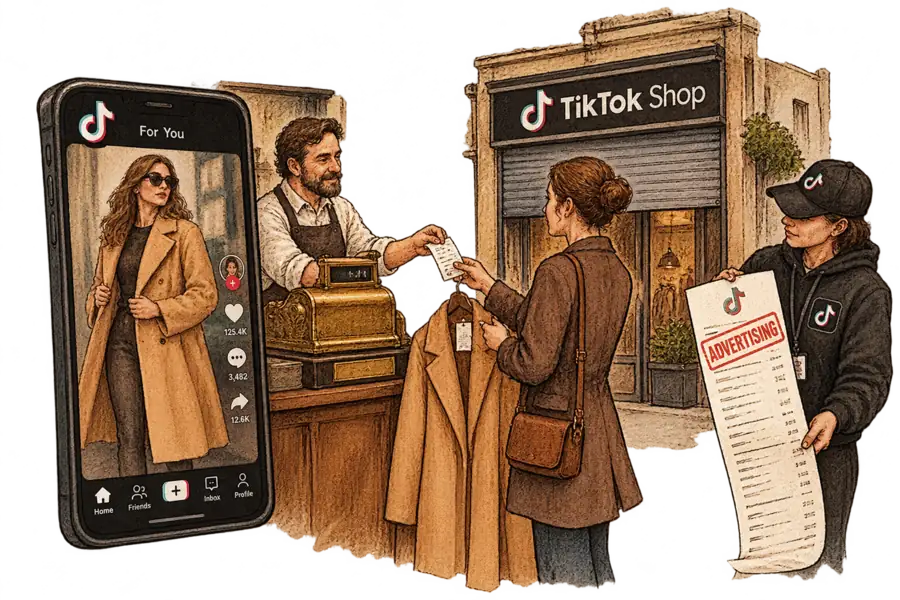
TikTok has found a way to put a checkout in its feed without running the shop. Buy Direct, unveiled at Advertising Week New York on 5 October, offers “one-click purchase using stored payment methods and saved addresses” from the For You feed. The brand remains “the Merchant of Record for transactions”, and TikTok’s own blog files the product among its “AI-powered advertising solutions”. Access is by “eligibility-based testing” and requires the Universal Commerce Protocol. The sale is the brand’s; TikTok sells the moment before it.
TikTok Shop works the other way round. TikTok runs the storefront, and the same day’s announcement lists “referral fees” among a seller’s costs. It told advertisers that GMV Max, TikTok’s automated ad tool, will now factor in “affiliate commissions, coupons, and referral fees”. For Buy Direct, TikTok has published no transaction fee.
TechCrunch reported that Buy Direct “could allow TikTok to capture more of users’ shopping journeys, and potentially more transaction value”. TikTok names the brand as Merchant of Record; it has not said who takes a fee on the order. On what TikTok has published, no Buy Direct fee appears, which suggests the advertisement is the main charge; the brand’s own payment costs would come on top.
A referral fee is charged when something sells; an advertisement is charged either way.
Salesforce, one of four named partners, tells its merchants they will still “capture the shopper’s direct contact information, purchase history, and preferences”; TikTok’s own pages are silent on data. Salesforce expects its rollout to begin in the first quarter of 2027. A label that stayed off TikTok Shop to guard its mailing list could then take a sale from the feed on its own terms.
The protocol was launched by Google in January, with Shopify, Etsy, Wayfair, Target and Walmart among its co-developers. Google’s checkout in AI Mode and Gemini uses “payment methods and shipping info already saved in Google Wallet”. TikTok has not said whose wallet holds its stored cards. If the card sits in TikTok’s wallet, the one-click habit is TikTok’s, whatever name the receipt carries.
TikTok has named no test brand. Adweek reports the rollout beginning with users and brands in the US, and quotes TikTok’s David Kaufman telling reporters that shoppers are dealing with “that merchant you already know”. It is the feed, though, that knows the shopper.
On 14 August, seven weeks before the launch, a developer whose GitHub profile lists TikTok asked UCP’s maintainers to standardise discounts a platform funds, which the brand issues and the platform repays. The still-open proposal says platforms can fund incentives “when the expected conversion, transaction, or ecosystem value exceeds the subsidy cost”. The brand may refuse each request and stays “authoritative for eligibility, stacking, application, and totals”. The issue never mentions Buy Direct. A platform that pays part of the price may yet want a say in the rest; the proposal does not say so.