White Stuff Missed the Attack, and Separate Systems May Be Why
TFG London's cyber incident hit Phase Eight, Hobbs and Whistles and missed White Stuff, which Drapers understands runs on separate systems after its October 2024 purchase. If the three affected brands share systems, the integration that cuts costs also sets how far one attack spreads.
Sir John Crabstone
Four days after TFG London identified a cybersecurity incident, Whistles’ website still greeted shoppers with “Online orders are paused.” Phase Eight and Hobbs were hit too; White Stuff, under the same owner, was not. If the three brands share systems, the integration that makes a portfolio cheaper to run also decides how much of it fails at once.
TFG’s notice to shareholders on Tuesday said the incident hit “certain of its IT systems, specifically our Phase Eight, Hobbs and Whistles brands”. Stores kept trading; several IT systems did not. Inside Story and White Stuff “are not affected”, and neither are the group’s African and Australian businesses, which “run on separate systems”. The notice gives no reason for the UK escapes, and it does not say whether the three hit brands share systems or how the attacker got in.
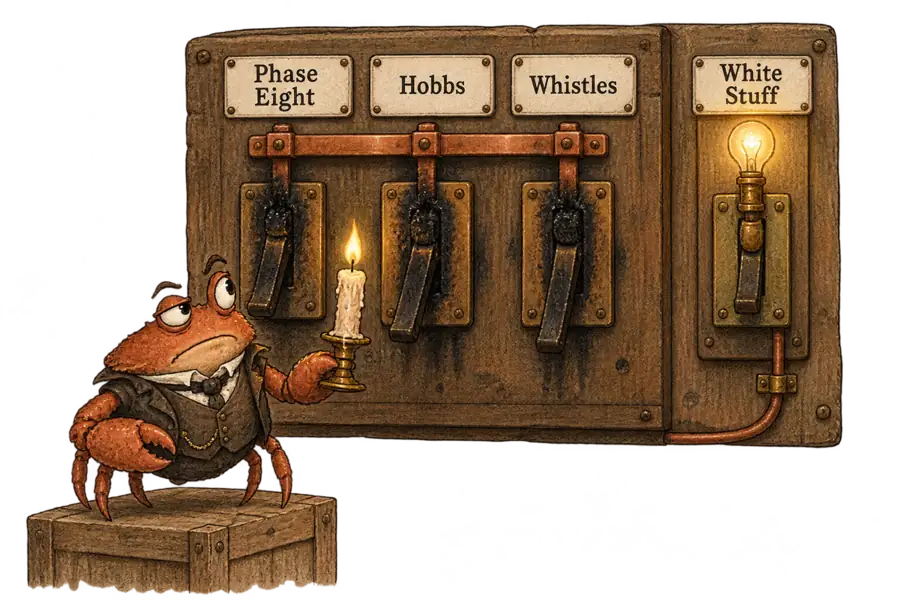
Drapers offers a reason. It understands that White Stuff was spared because it “operates on different systems, being the newest brand to have been acquired under the TFG umbrella, in October 2024”. That is Drapers’ understanding, not TFG’s statement. If it holds, an unfinished integration counted as protection this week.
Finishing it was always on offer. TFG’s announcement of the deal said TFG London would “now be in a position to create a unified retail platform in the United Kingdom”. The logic of such platforms is plain: a cluster of mid-sized labels runs on the cost base of one large one, and has one set of systems to lose.
Every shared system promises the brands on it the same bad day.
A shared storefront makes the same promise. On 6 October an “unauthorised customer notification” was sent via ASOS’s app. One brand it stocks told Drapers that sales since the weekend trail both last October and the weeks before the alert, with “a substantial drop in order volumes”. Another’s chief executive said sales had “definitely been lower”. Those are two brands’ accounts, and a senior source quoted by the same report said ASOS “now has things under control”. The attack was on ASOS; the missing orders, by the brands’ own telling, are theirs.
TFG London has its own history with a partner’s cyber incident. In June TFG reported a 65.4% fall in the division’s segmental EBIT for the year to 31 March 2026, a non-IFRS measure that excludes the Phase Eight impairment and prior-year acquisition costs. It blamed “negative operating leverage”, and listed weak occasionwear, softer department-store trading and “disruption arising from a significant cyber incident affecting a key online concession partner” among the pressures on its legacy brands. It named neither the partner nor a cost.
Last November TFG’s half-year results deck had already listed “major cyber attacks disrupting partner performance” among the headwinds. The same slide named “leveraging data and the platform to drive efficiency” as an area of focus. One page held both halves of the question and filed them under different headings.
A unified platform would end whatever separation spared White Stuff. If TFG finishes the job, White Stuff will be on it for the next one.