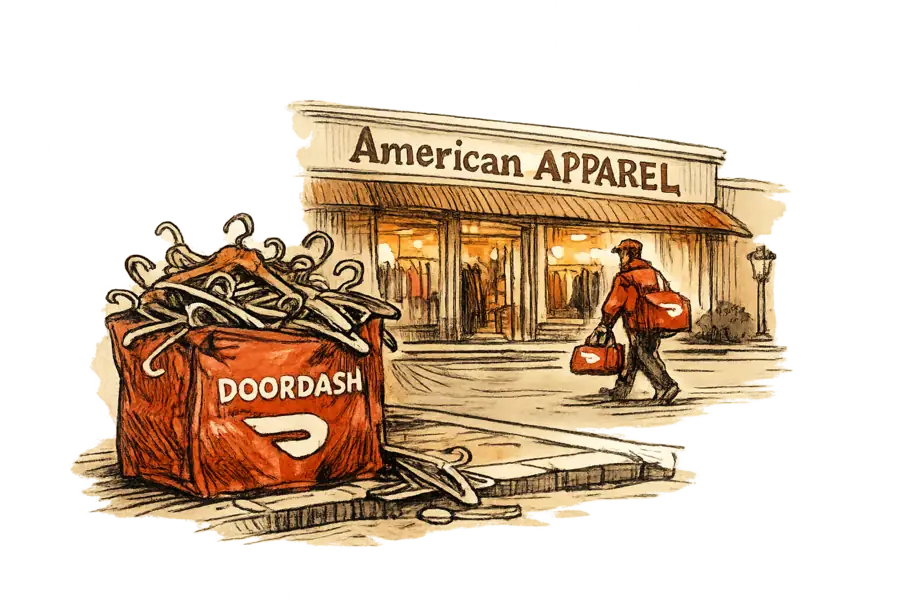
The Apparel Warehouse DoorDash Did Not Have to Build
DoorDash is adding Urban Outfitters, Steve Madden, Dolce Vita and Rally House to its marketplace this spring, building on Old Navy, Hibbett and Foot Locker deals already live. The play replaces the warehouse capex every apparel platform has paid for with a routing layer over existing stores.
Sir John Crabstone
Every apparel marketplace of the last decade built a warehouse before it built a catalog. Stitch Fix, Revolve, and Amazon’s clothing division each paid the capital bill for fulfillment before they learned whether anyone wanted what they were selling. DoorDash, which has never stored a shirt, announced in late March that Urban Outfitters, Steve Madden, Dolce Vita, and Rally House will arrive on its marketplace in spring.
The groundwork was older. Old Navy joined in November across more than a thousand U.S. locations, framing the partnership as a convenience play. The Dashers were already outside the stores.
Hibbett followed, extending the map into sporting goods retail across dozens of states. Athletic footwear was now within an hour of most suburban postcodes, and nothing had been built.
The Foot Locker group arrived months later with nearly thirteen hundred more. The inventory was already there; only the software routing it was missing.
This is not new capacity — it is newly-routed capacity.
DoorDash’s pitch to apparel brands is that seventy to ninety percent of marketplace sales are incremental — a figure the company built its case on in grocery and now extends to retail broadly. Apparel VPs will want to interrogate it before they hand over a size grid. The platform now lists more than 500,000 retail products available in under an hour, and its non-restaurant merchant base has grown from 115,000 in 2024 to 150,000 by early 2026.
The real pitch is simpler: the store is the warehouse, the Dasher is the shelf, and the customer was never going to pay for either. Amazon reached the same conclusion after two decades of capex; DoorDash arrived at it by accident, while delivering burritos.
Apparel returns dwarf food returns, and a Dasher who misreads a pickup is a costlier mistake than a lukewarm entrée. DoorDash has not invented a cheaper way to move clothes; it has found a cheaper way to avoid building the place that holds them. Whether that distinction earns a margin or hides one will be visible by Q3.