The Assistant Can Only Retrieve What You're Famous For
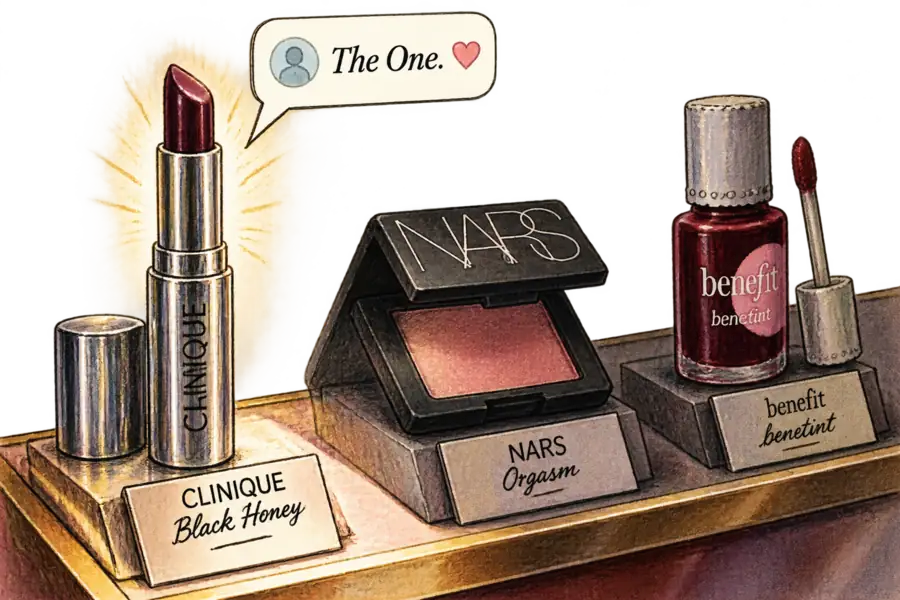
Heritage beauty spent the summer reissuing Secret Camouflage, Black Honey, Vitamin Enriched Face Base and Benetint. Read as retrieval strategy rather than heritage marketing, the hero-product revival is an assortment cut aimed at machines that recommend the brand they already know.
Sir John Crabstone
Heritage beauty spent the summer reissuing its oldest products, and the trade has filed the exercise under nostalgia. Laura Mercier brought back Secret Camouflage in May; Clinique pushed Black Honey into nail polish in June; Bobbi Brown and Benefit followed in July, as Glossy reported. Nostalgia is the cover story; the work is narrowing each house to the handful of objects a machine can name unprompted.
The trade’s own account is saturation. Lisa Payne, head of beauty at the forecaster Stylus, told Glossy that reviving proven products is “a shrewd strategy” for houses that “can’t be quick to innovate newness.” That explains the retreat. It does not explain why the retreat stops at precisely the products a machine already knows.
The machine’s preference has been measured. Xi Chu and Yupeng Hou put skincare recommendations to three commercial models, pitting a real brand against an invented one with identical specifications. The real brand won 670 trials out of 670. Nothing on the product sheet moved the answer; only the name did.
Shelf space rewarded the longest catalogue; retrieval rewards the shortest one anybody can recite.
Glossier has done the same arithmetic from the other end. It has discontinued Wowder and the Brow Flick pen, trimming toward best-sellers like Cloud Paint and You, per Glossy. Twelve years in, the brand is cutting its way toward a shorter list.
The channel is now large enough to make this rational. AI-referred traffic to US retail sites rose 138% year over year in May and converted 54% better than traffic from any other source, on Adobe’s numbers as reported by Digital Commerce 360. Cosmetics was the most machine-readable category at 63%. Beauty is the easiest thing in retail for a machine to read, and the machine still misses more than a third of it.
The reward for being nameable shows up off the platform. A clickstream study by Michael Iannelli and Alan Ai matched assistant conversations to real browsing. When an assistant recommended a brand, brand-specific Google searches rose 4.3 percentage points and visits to the brand’s own site rose 2.4. Mentions in passing moved less than half as much. Being known is cheap; being named is the transaction.
The narrowing carries a defect the reissues cannot repair. In the same skincare trials, the incumbent’s monopoly gave way to a rival once that rival carried a rating advantage of just 0.075 stars. In a later round, invented brands that declined to optimise for the models drew zero recommendations across 4,745 attempts. Fame gets Black Honey into the answer. Less than a tenth of a star takes it out again.