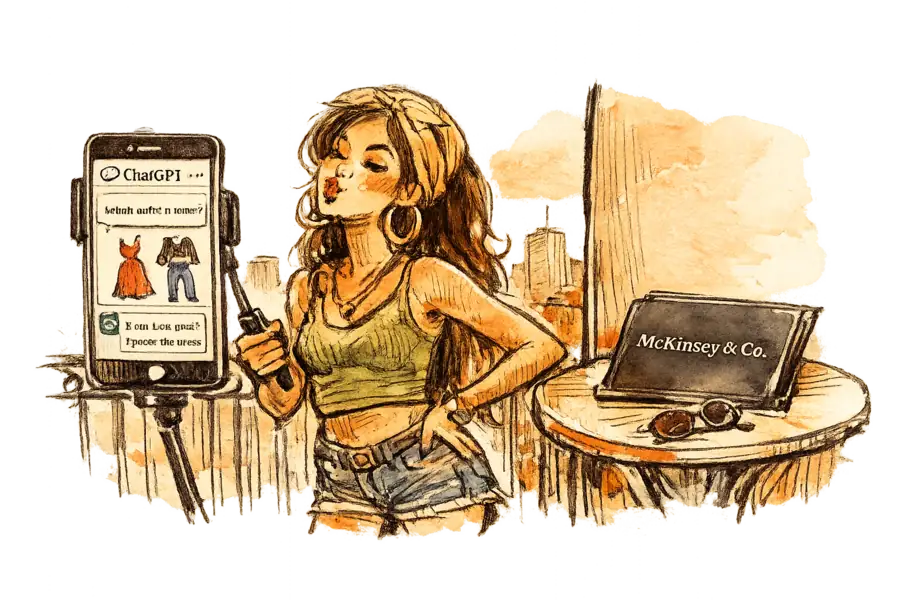
Brazil's Gen Z Filmed The Prompt McKinsey Only Counted
Brazilian retail and consumer press have been transcribing how Gen Z uses ChatGPT to evaluate apparel brands. McKinsey's State of Fashion 2026 reports the same shift in aggregate. The shopper-side methodology is more specific than the vendor deck.
Sir John Crabstone
On Brazilian TikTok, the Gen Z shopper does not hide her algorithm. She films it. The Brazilian retail press has the methodology in transcript form; McKinsey has it in aggregate.
Metropoles documented the cohort treating ChatGPT as a stylist — outfits for job interviews, looks for rainy second dates, colour palettes the model proposes. The prompt is the post. The shopper publishes her workflow.
Central do Varejo profiled GDR’s Kate Ancketill in March on the same shift. The supply side is reading the dispatch after the shopper has already filed it.
McKinsey’s State of Fashion 2026 reads the shift as an infrastructure question. Semantically rich product data is the new prerequisite. The report measures the shift. It does not transcribe it.
The asymmetry is not exotic. Lisbon, Lagos, and Los Angeles run the same prompts. Brazilian TikTok files the footage. Elsewhere, the methodology exists in private messages and panels McKinsey can convene.
The shopper has documented her diligence; the vendor deck is still selling the transition as news.
Exame circulated the bracketed comparison template — average price, main differences, advantages, disadvantages, value to a common user — pasted into ChatGPT before any checkout. The query is specific where the deck is not.
A study cited by InfoVarejo found 55% of the same cohort research the origin of materials before buying. The diligence runs upstream of the desire. The retailer who answers the styling question and skips the provenance one has not read the prompt. The order of operations is the brand’s new dress code.
Business of Fashion’s coverage of the McKinsey report calls it a fundamental change in how people find and evaluate products. The instruction is correct and incomplete. A brand can re-platform its catalogue without learning the prompt and still face a shopper who has already asked her question.
The shift is structural. Lookbook, runway, magazine column, paid influencer: every prior architecture invited the shopper toward a recommended outcome. The prompt forecloses the invitation. The brand’s old job was to be desired; the new one is to be retrievable.
A creator can be paid to like the jeans; ChatGPT cannot. Heritage was decisive when the catalogue was where shoppers searched. The chat window is where they search now. The brand that survives prompt-mediated evaluation does so on the merits the model can see.
This is the Brazilian press desk’s accidental advantage. Its cohort narrates its consumption in public-facing video at a scale no other market matches. The methodology has been on the record since at least last December. McKinsey will eventually measure what Brazil has already filmed. The vendor decks explain a shift the shoppers have already finished.