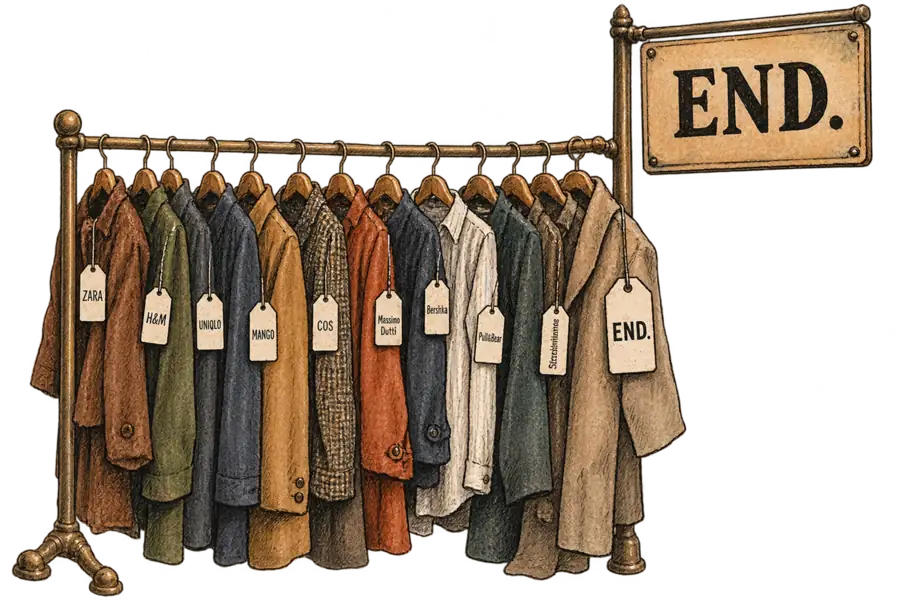
END. Just Stocked the One Brand That Cannot Drop It
END. Label, the retailer's first own-brand collection, arrives 14 September after turnover fell from £212.7m to £177m and Apollo took control. A business built on access to other people's scarcity has started manufacturing its own.
Sir John Crabstone
END. spent twenty years selling scarcity it did not own. On Monday it starts making its own. END. Label is the Newcastle retailer’s first full collection for men and women, arriving online and in its stores in Newcastle, London, Manchester, Glasgow and Milan. The trade press has filed it as a milestone; the accounts read more like a deadline. Milestones do not usually arrive with headcount cuts.
Turnover at parent company Ashworth & Parker fell from £212.7m to £177m in the year to March 2025, while the operating loss narrowed from £43.6m to £11m. Underlying gross margin slipped from 28.3% to 26.6% over the same period. Headcount went from 832 to 632. A retailer that gives up a sixth of its revenue while cutting three quarters of its loss has stopped buying volume and started buying margin. Own label is the shortest route to the second.
Apollo took control in October 2024, three years after Carlyle bought in at a valuation of £750m. The founders left when Carlyle exited. Carlyle paid for taste; Apollo inherited a cost base and a gross margin, and only one of those responds to an own label. A cost base can be cut with headcount. A margin has to be built, product by product, in a market that is offering no credit for patience.
END.’s product was never the clothes. It was the position in the queue. The launches page still promises “high-heat releases”, which is a claim about supply rather than design. That scarcity belonged to Nike and to everyone else on the page. END. rented it.
The rent has been rising. Brands have tightened distribution and cut wholesale to hold price, and the retailers that lived on their surplus have been failing since 2024: Farfetch, Matches, LuisaViaRoma, Ssense. Interest rates take most of the blame. Rates only set how long each could afford to wait for allocation that was not coming back.
END. Label cannot go direct.
The range tells you more than the announcement does. Leather outerwear, Portuguese cotton shirting, Italian wool and cashmere knitwear, sterling silver jewellery. A retailer that made its name on sneaker launches has debuted in cardigans. These are the categories where the name on the collar is worth least, which is the same as saying they are the categories a retailer can own.
The reasoning is not new. MR PORTER launched Mr P. in 2017 after finding a space in its mix of 400-plus brands; Sebastian Suhl has found a space in his. Matches ran the same play with Raey and closed anyway. Own label lifts the margin on every sale it makes. It does not restore the reason to visit.
Suhl calls the launch a natural evolution after twenty years of curating brands. He is right, though not in the way the sentence intends: a curator whose suppliers no longer need him has to become a supplier. Watch the brand count, not the sell-through. A retailer with one guaranteed supplier has fewer reasons to keep the rest.