Gap Bought CB4 Once. The Rest Have Been Rentals.
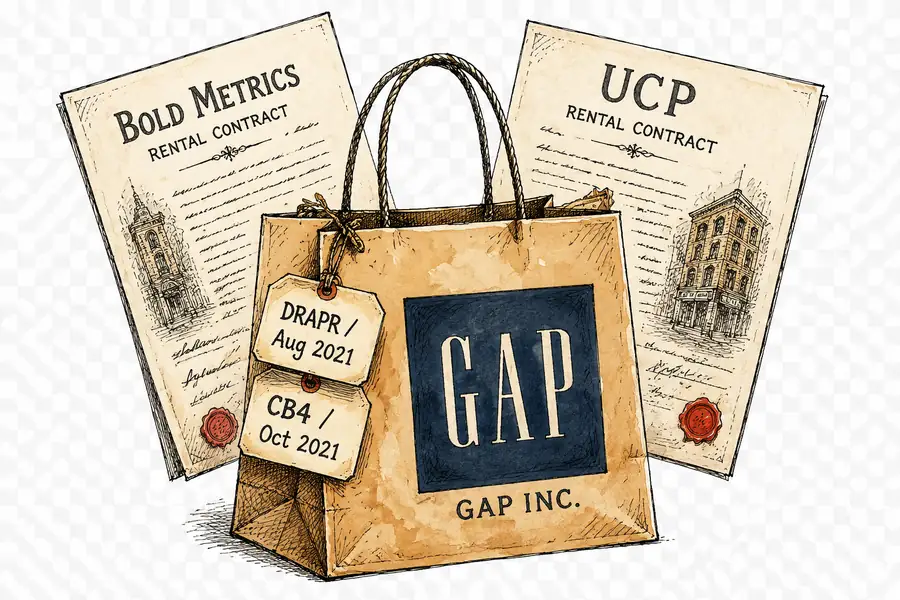
Gap made two technology acquisitions in 2021 — DRAPR in August, CB4 in October — and has rented every capability since. The 2026 partnerships with Bold Metrics and Google's Universal Commerce Protocol confirm the mode has held. The appetite for M&A has not returned.
Sir John Crabstone
Gap acquired CB4, a Tel Aviv and New York predictive-analytics startup, in October 2021 — the second technology company it bought that year. The first was DRAPR, a virtual try-on startup taken on in August. Both acquisitions have stood unaccompanied since. Every receipt the company has logged in the half-decade since has been a rental, and 2026 alone has produced two.
In March, Gap announced Bold Metrics for fit guidance and joined Google’s Universal Commerce Protocol, so customers could check out inside Gemini. Neither arrangement required a term sheet.
The Japanese trade press read the CB4 deal on its own terms.
Business Insider Japan covered it as a study in crisis-driven innovation: demand sensing acquired because Gap’s buying apparatus had stopped reading the market correctly. WWDJAPAN covered it more flatly — as Gap strengthening its technology investment, backed by Sequoia Capital. The company was fixing something that had broken and calling it an investment.
DRAPR in August, CB4 in October: those two 2021 purchases mark the last time Gap put technology on its own balance sheet. Five years on, the procurement returned. The acquisition has not. The distinction matters: procurement gives access; acquisition gives control of what gets built next.
The structural case for acquisition is that it scales the buyer’s roadmap, not the vendor’s. Owning the team owns the priorities. Gap bought CB4 because demand sensing was a problem Gap wanted only its own people to think about. The 2026 vendors are servicing a longer queue. Bold Metrics sells fit to anyone with a return-rate problem; the Universal Commerce Protocol is, by definition, for everyone.
The pattern extends across the season. OTB just consolidated five luxury houses on Google Cloud, also without a term sheet. Procurement scales easily; M&A demands a thesis.
The thesis that brand-side AI is now M&A-eligible is correct and survives Gap’s example. Eligibility is not appetite. The operating model keeps both modes open only because Gap once paid for offices in Tel Aviv and New York in equity, and that precedent does not expire. Partnership terms reset at renewal; ownership stakes do not. Most apparel houses since have followed the procurement track without first taking ownership of any underlying technology.
A house that has bought twice and rented since is still a house that has bought. The next acquisition would not be a precedent. It would be the second recurrence of a habit Gap has spent five years quietly declining to develop. Whether the procurement track holds depends on what the house eventually finds it cannot lease.