Ritual Priced A Senator At Ten Emails
Ritual built a QR-coded pipeline that converts its customer database into Congressional mail. Ten emails per issue is the published price; the list is much longer than ten.
Sir John Crabstone
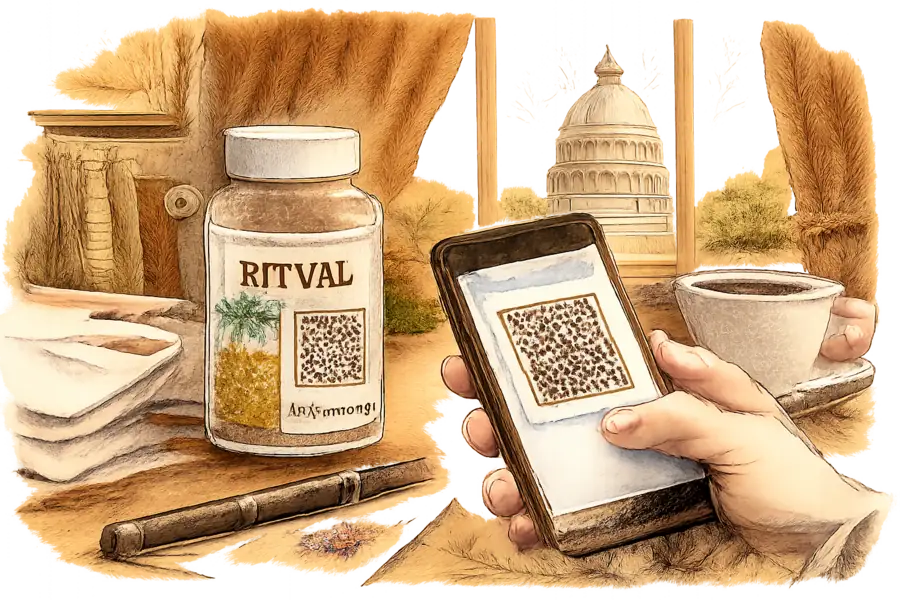
Ritual’s new We’re Expecting campaign, as reported by Glossy, asks customers to write their senators about heavy metals in prenatal vitamins. A QR code routes to a Quorum platform that drafts and sends the letter for them. Ritual CEO Kat Schneider has said ten emails will move a senator’s office to appoint a staffer to the issue.
The campaign spans digital, print, out-of-home, and professional channels. Ritual’s team has already met with seven senators in person: Warren, Murray, Durbin, Padilla, Blumenthal, Schiff, and Warnock. The asks are federal limits on heavy metals in supplements, a regulatory definition of “clinically studied,” and the unfreezing of FDA research budgets.
These asks are conveniently designed. Ritual already meets them. The company is already Clean Label Project certified and has committed to clinical evidence on every product by 2030. It has already lobbied California into passing SB 646, which mandates heavy-metal testing on prenatal vitamins from 2027. The regulation it wants is the floor it has already cleared; its competitors have not.
This is not consumer activism; it is competitor exclusion run through a mailing list.
Wellness marketing spent a decade learning that a believer converts better than a skeptic. Schneider has learned something sharper: a customer list already filtered for belief and willing to scan is the cheapest lobbying instrument in Washington. Ten emails is the price of a Senate issue. In 2024, Ritual generated over $250 million in gross revenue. The list is presumably longer than ten. The arbitrage is enormous; it is also, in the only sense that matters in Washington, entirely legal.
If “We’re Expecting” produces hearings, every wellness CMO with a competent CRM will be drafting a legislative ask by Q4. Beauty has the cleanest test case. Heavy-metal contamination is well-documented, and the FDA’s authority over cosmetics is, by statute, almost nothing. The cosmetics CMO with a database and a grievance now has an instrument.
The model travels further. The fashion houses now publishing supply-chain pledges and labour-rights reports already have the mailing lists and the posture. They have not yet learned to ask a shopper for a senator. They will. Every brand of that size already has its ask in a drawer.
Brand activism has, for fifteen years, been a posture meant to be seen — a flag run up the pole so the right shoppers might salute. What Ritual has built is the first version that does work, that converts a database row into a stamped envelope on Capitol Hill at near-zero marginal cost. The flag is now a flagpole, and the senators have noticed.
Ritual is asking Washington to require what Ritual already does. The customers signing the letters do not need protection from Ritual; they have already chosen it. They are being asked to protect Ritual from its competitors, and they will, because the letter is pre-written and the QR code is right there. The lobbying is the smaller insight. The deeper one is that a customer who clicked subscribe was always going to click send.