The Script Replaced the Host
Pinduoduo is testing AI-generated interactive dramas where branching plot choices route viewers to product pages. When production costs collapse and scripts become shoppable, the livestream host is overhead.
Sir John Crabstone
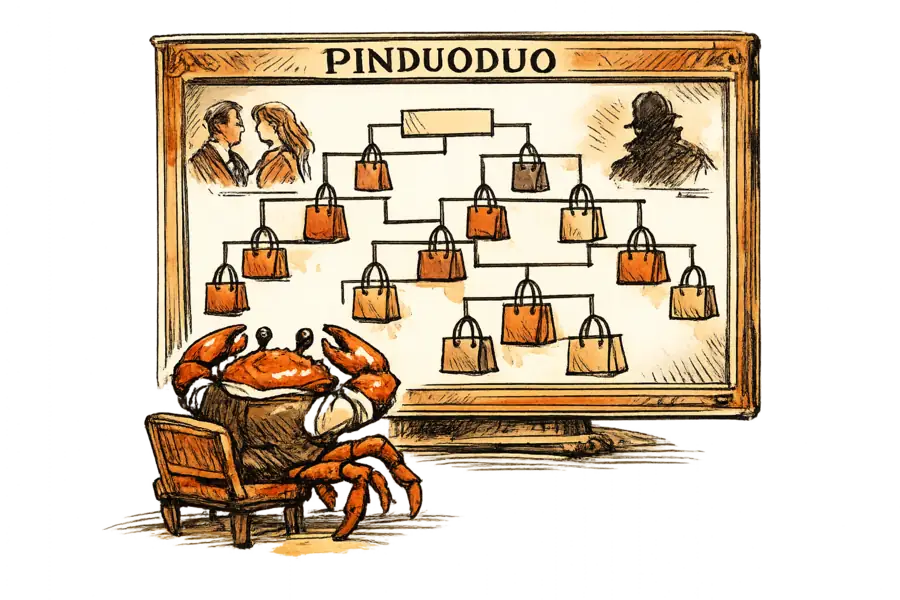
China spent a decade turning livestream hosts into salespeople. Pinduoduo now wants to skip the host entirely. In March, the platform began grey-scale testing “Return Again,” an AI-generated interactive drama. User choices at plot junctures determine which products appear on screen. Items worn by characters link to the Try-On feature and, from there, to checkout. The pitch has been folded into the plot.
The mechanic borrows from gaming, not television. At key moments, viewers pick what happens next. Each branch surfaces different products; each product links to Pinduoduo’s group-buy engine. The distinction from product placement is material. In a conventional drama, the branded coat on screen is a sponsor’s imposition. In “Return Again,” it is a consequence of a choice the viewer made two scenes ago. The viewer is not being sold to; they are being given what they asked for. ByteDance tested interactive narrative stories on Tomato Novel, its reading platform, over the same period. Livestreaming requires a host, a ring light, and stamina; AI drama requires a render farm.
China’s micro-drama market hit 100 billion yuan in 2025, doubling from the year before. The sector had surpassed the domestic box office for the first time in 2024, when the market was still half its current size; the 2025 figure confirms the gap is widening. Some formats report margins above fifty per cent.
AI has compressed the production economics. Per-episode budgets have fallen from several hundred thousand yuan to just over 100,000 yuan for an AI-generated production of comparable length — a threshold any mid-size brand can meet. At the lower end of the market, costs have dropped further: from tens of thousands of yuan to a few hundred, and production cycles from weeks to hours. ByteDance’s Seedance 2.0 generates multi-shot sequences in roughly a minute. Over ten thousand AI-generated titles have shipped monthly since January.
Ten thousand titles monthly means a catalogue that refreshes faster than any audience can exhaust it. A host occupies one slot and goes home; a drama shelf simply grows. The economics of livestream commerce depend on personality, scheduling, and stamina. Scripts scale.
When the script is the catalogue, the host is overhead.
Beauty leads brand adoption of the micro-drama commerce format. The logic is plain. A livestream host holds up a serum and describes it. In a shoppable drama, a character applies it in a scene the viewer chose. Same demonstration; this time the viewer asked for it.
Viewers have shown they will shop while watching a livestream. Whether that impulse survives narrative investment — whether caring about a character deepens the commerce trigger or simply displaces it — is what Pinduoduo is paying to find out. If audiences prove willing to buy from stories they helped write, the format will move upstream: from Pinduoduo to premium platforms, from low-budget AI serials to branded content with actual production values. Drama audiences have always resented the sell. They may make an exception for a story they get to choose.