Wonderskin's Second Act Was The Hard Part
Wonderskin sold six million lip-stain units and used the runway to build a second hook. Insight Partners' $50m Series A is the bet that the lip stain was the first instance of a method, not the only one.
Sir John Crabstone
The lip stain that made Wonderskin viral is no longer the lip stain that makes Wonderskin a company. The brand has cleared six million Wonder Blading units since 2020, turned $125m in revenue last year, and grew sales 300 percent in two consecutive years. The interesting line in those numbers is not the lip stain.
The reveal video sold the lip stain. What sold the company came after. Most viral beauty brands spend that window selling more of the same SKU. Wonderskin spent it building a second hook.
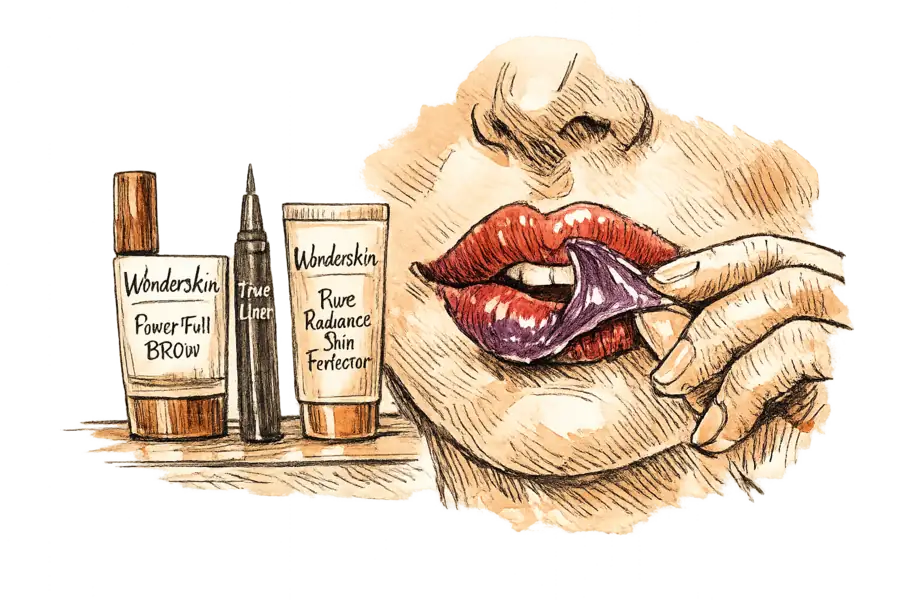
Brow and eye launches have collected awards; the complexion line has shipped. Each carries the operating logic of the original: a long-wear, multi-use mechanic a customer can demonstrate on camera in under a minute.
The peel was theatre; the format was the lab.
CEO Michael Malinsky has built something most beauty founders cannot: the discipline of pulling launches that do not earn their own attention. A hybrid skincare item and an additional makeup line both went up and came down again when they lacked the virality and visual excitement of the original. Most founders defend the launches they signed off on. Malinsky retires them. Each decision was small. The pattern is not.
This is the part the casebooks miss. Coverage of Wonderskin treats the lip stain as a marketing case. The more useful reading is operational. Wonderskin did not learn how to sell a peel-off lip stain in 2020; it learned which product mechanics survive a TikTok algorithm with the sound off. Long-wear was one finding. Reveal was another. The kit format was a third: applicator, base, sealing layer. All three sit beneath every launch since.
The category dominance is on Amazon: twelve consecutive months at #1 in the lip stain category. The strategy hides in plain sight in the Series A release, in the phrase “an expanding portfolio of long-wear, multi-use innovations”. In beauty PR, that always reads like marketing. Here it is a job description. Wonderskin is not building lipsticks and eyeliners. It is building a small set of repeatable demo formats and applying them across the face.
Mind Games grew 56 percent in 2025 without a hero scent, as we wrote yesterday, because the portfolio carries the load. Wonderskin solves the inverse problem: a hero so dominant that the second SKU has to earn attention from scratch. The lip stain bought trial. Trial is not a strategy.
The $50m Series A Insight Partners closed in 2025 funds two things: retail expansion into Sephora, Boots, Nordstrom, and Revolve, and the question of whether the methodology outlasts the lip stain. Insight is paying $50m to find out whether the lip stain was the first instance of a method, or the only one. The next launch, and the one after, will answer it more honestly than any press release.
The brands that fail at this fail quietly. The viral hit keeps selling for two more years; the second launch underperforms; the third does not arrive. Wonderskin has spent five years teaching itself the alternative. The next twelve months will tell whether the lesson took.